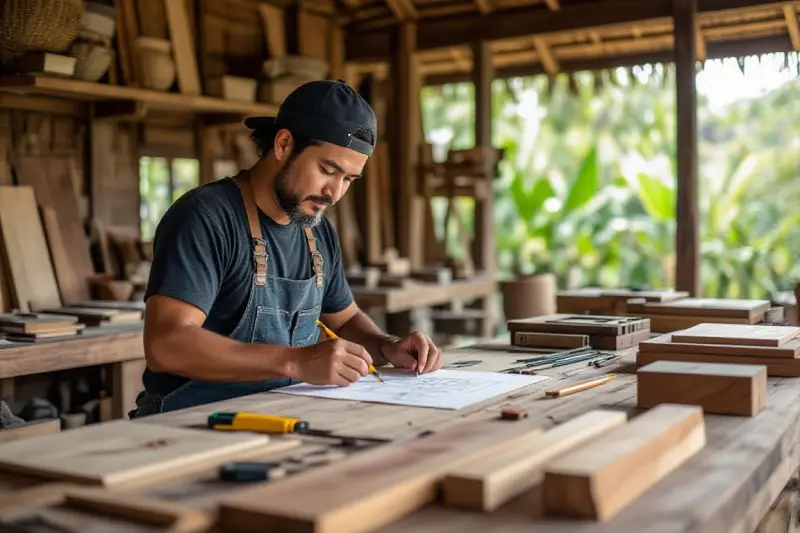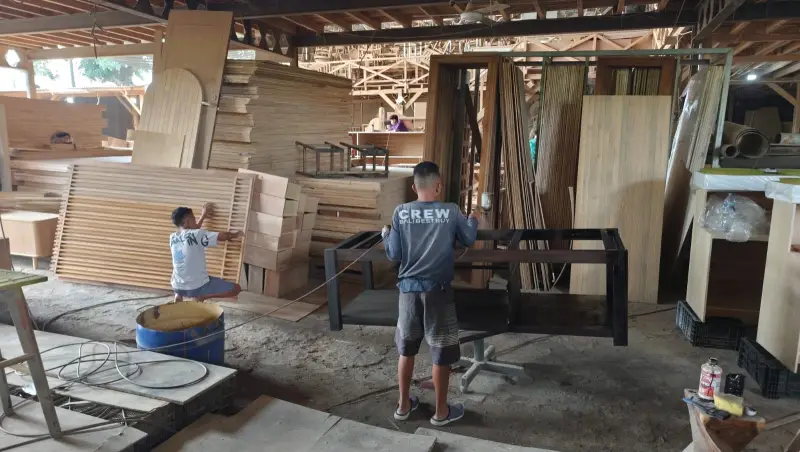
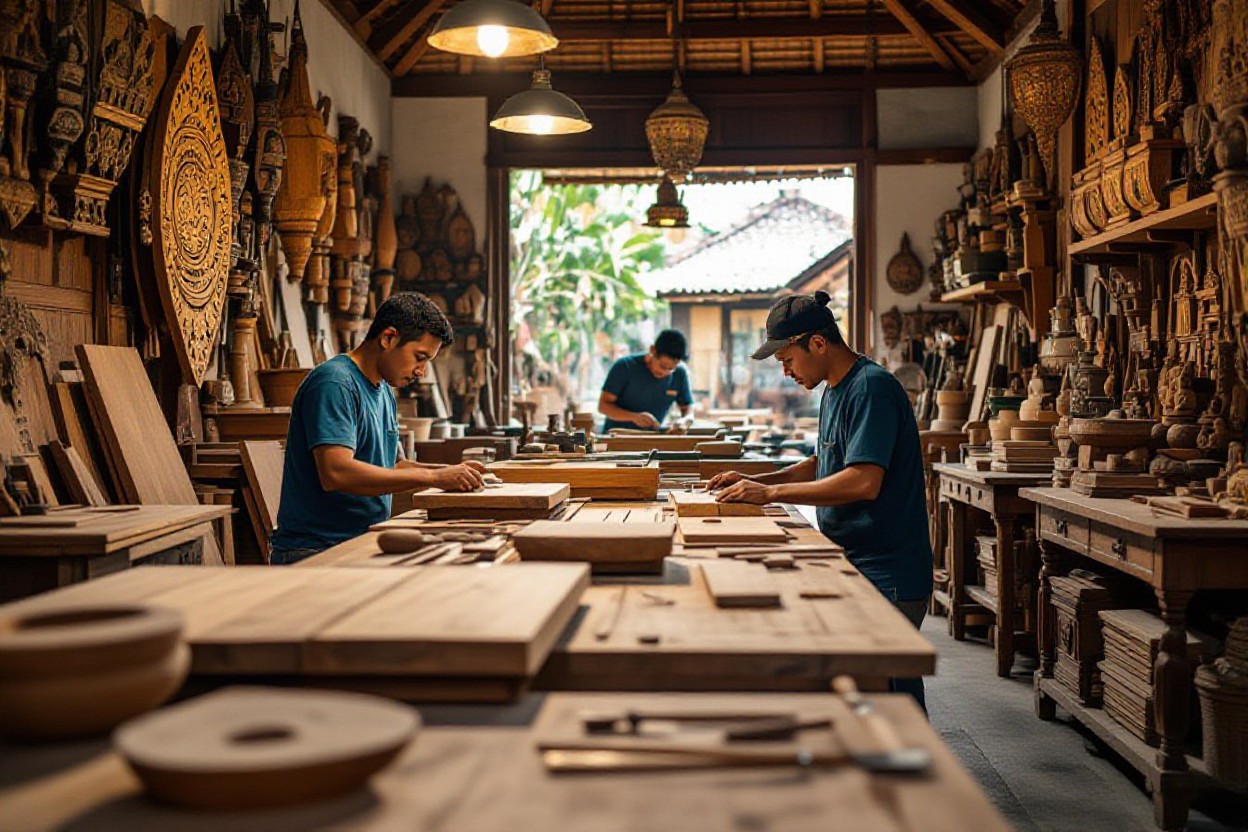
This idea that you’ll just stroll into a Bali furniture workshop, point at a chair, and walk out is kinda off – your first visit is more like stepping behind the curtain of how solid teak tables, hand-carved panels, and custom pieces are actually born. You’ll see wood stacked high, hear chisels tapping, smell sawdust in the air, and yeah, it can feel a bit intense at first.
Because it’s a real workshop, not a polished showroom, you’ve got to be aware of open tools, heavy planks, and slippery offcuts around your feet. You’ll talk directly with makers, watch them shape your ideas, and you’ll quickly notice they care a lot about craft, durability, and how the piece will live in your home. It’s messy, fascinating, sometimes noisy… and that’s exactly why your visit feels so different from any regular furniture store.
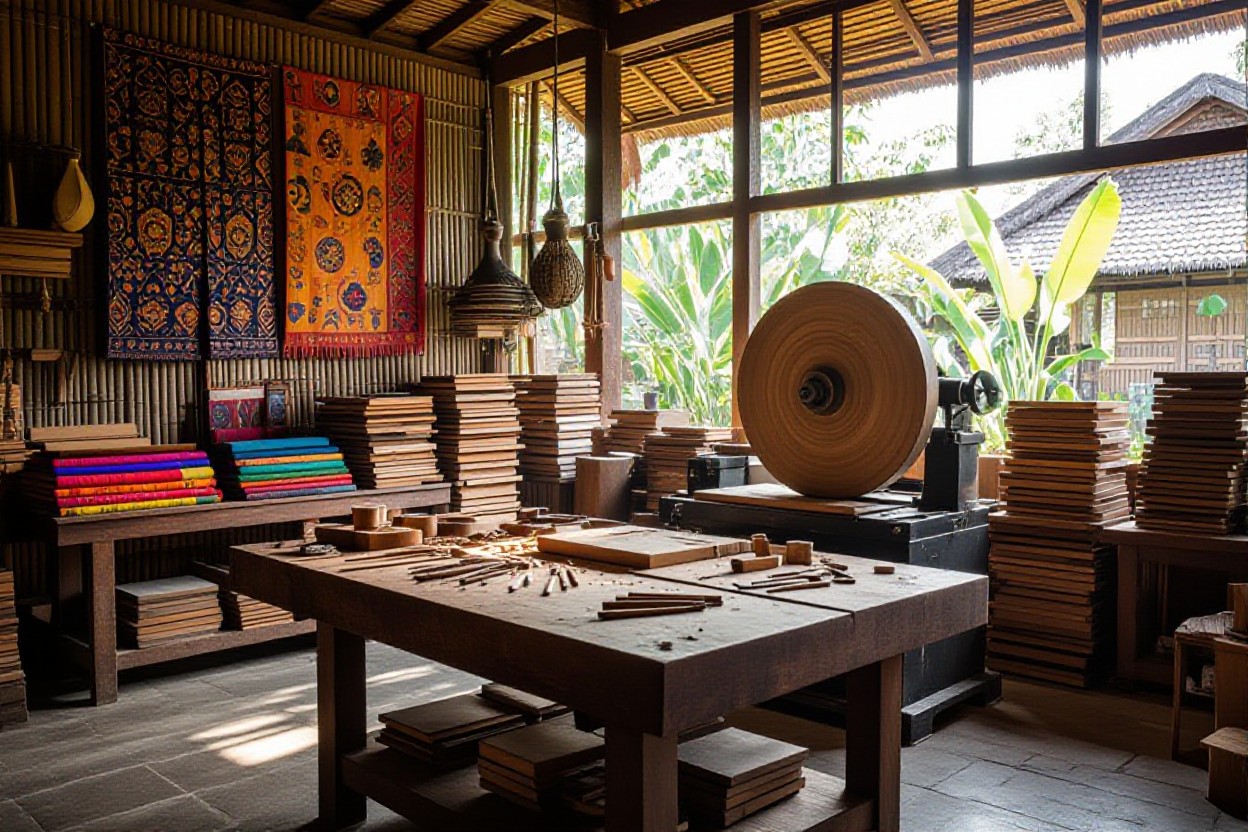
What to Expect at a Bali Furniture Workshop
The Vibe – What’s the Atmosphere Like?
You usually notice it before you even step inside: that mix of wood dust, incense, and fresh varnish hanging in the air. Roosters might be crowing nearby, a motorbike whizzes past, and in the middle of that everyday village life you walk into a space where chisels are tapping in rhythm and planers are singing across teak planks. It feels alive but not chaotic, busy but strangely calm – like everyone knows exactly what they’re doing and where the day is heading.
In most Bali workshops, the energy is friendly and open, not stiff or showroom-ish, and you’ll often be greeted with a smile and a casual “Mau cari apa?” as you wander in. You might see one corner quietly focused on carving while another is full of laughter around a sanding table, and no one seems in a hurry, yet furniture is definitely getting finished. That mix of village life, craft, and easygoing conversation is part of why you can feel comfortable asking questions and getting up close to the process instead of feeling like you’re in some sterile factory.
Meeting the Makers – Who’s Behind the Craft?
It usually starts with one person looking up from a workbench, wiping their hands on a rag, and giving you that curious half-smile. Within five minutes you’re being introduced to the main carver, the finishing specialist, maybe the owner’s uncle who “just helps with quality control” but is clearly the one everyone quietly listens to. These aren’t anonymous workers hidden out back – they’re often the same people who’ve been building for the same clients for 10 or even 20 years.
In many family-run Bali workshops, you’ve got three generations under one roof: a grandfather who used to carve temple doors, a middle-aged owner who deals with export clients, and younger cousins who handle CAD drawings and Instagram. You might talk to a 24-year-old who can show you a Revit layout on their phone, then turn around and see their father hand-cutting joinery the same way he learned at 13. That mix of tradition and modern know-how is why you can ask for a very specific design and actually get it built properly, not just “something similar”.
What catches most visitors off guard is how accessible these makers are once you break the ice for real: you can pull out your phone, show a photo of your living room, and they’ll start sketching ideas right on a scrap of plywood, asking about your climate, your kids, your pets, how heavy your sofa usage is on a weekend. You might hear them trade ideas in Balinese, then turn back to you and explain in clear English why a certain joint or wood species will last 15 years instead of 5, and when they tell you “we did something like this for a villa in Canggu with 12 rental guests a week and it still looks good”, that real-world case study is your quiet green light that these folks actually know what they’re doing.
Workshop Layout – Where to Explore?
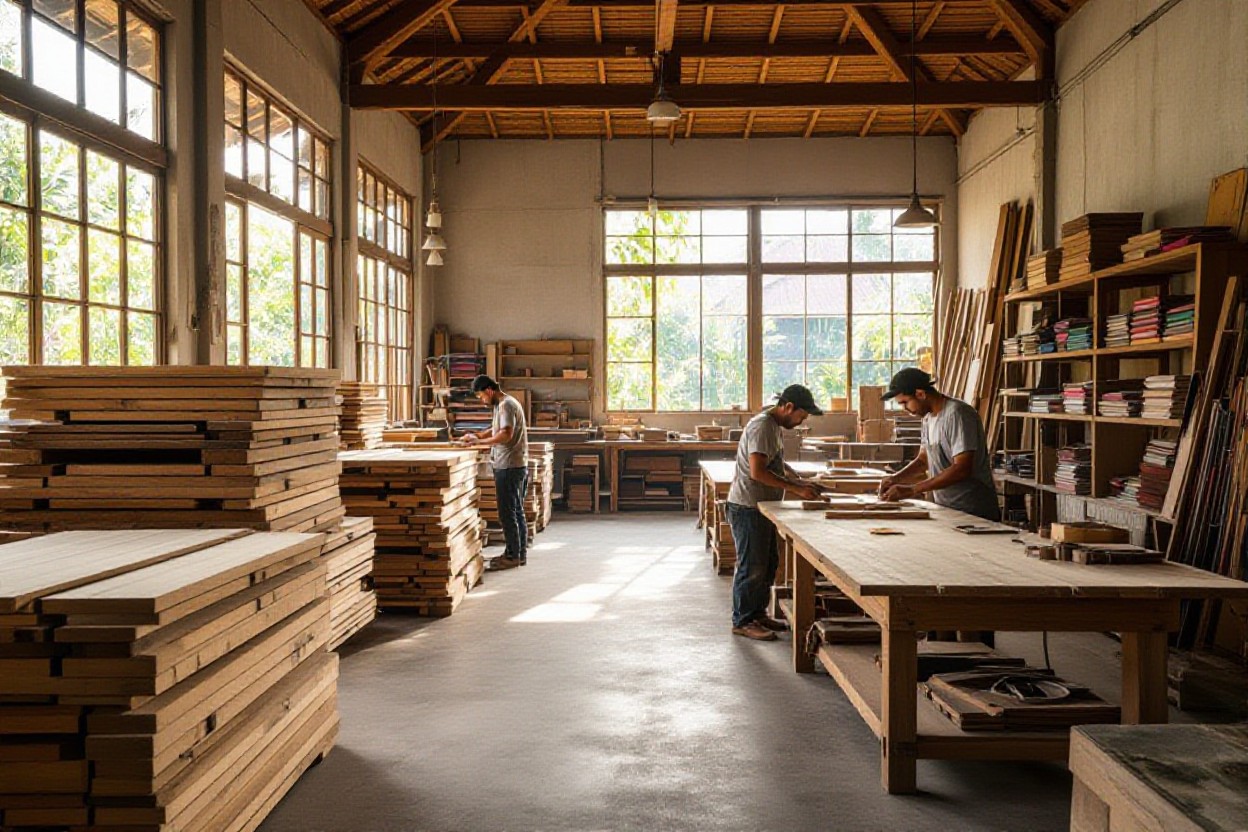
Your first walk through can feel like stepping through chapters of a book: raw timber stacked at the front, half-built pieces in the middle, finishing and packing at the back. Usually there’ll be a timber yard or storage area where you see teak, suar, or mahogany planks graded and stickered for drying, sometimes even with moisture readings written in chalk, which is your signal that they’re taking wood stability seriously, not just grabbing any board. A few steps on, you hit the main production zone where frames are assembled, carved, and sanded.
Past that, you’ll often find a finishing area with spray booths or hand-rubbing stations, filled with test panels showing stains from “natural matte” to “dark walnut 30% gloss”. Off in one corner there might be a small office or design desk, usually overflowing with sketches, fabric swatches, and half-finished coffee. Each area has its own vibe and noise level, and you’re generally welcome to walk through as long as you stick to the paths and stay clear of spinning blades and compressor hoses snaking across the floor.
Once you know what you’re looking at, that layout becomes super useful for your project: you can stand in the timber area and physically see the difference between kiln-dried and air-dried boards, walk to the assembly zone to watch how they reinforce sofa frames for rental villas doing 70% occupancy, then finish in the finishing section where they’ll show you sample boards that survived 1 year of outdoor exposure in Ubud’s humidity. Moving through those spaces is basically your live, real-time audit of their entire process, and it gives you a way more honest picture than any glossy catalog ever will.
Types of Furniture You’ll Find
| Solid Teak Dining Tables | You usually spot the dining tables first because they’re massive, heavy, and unapologetically bold. A 2.2 meter teak dining table with a single slab top can weigh over 100 kg, and when you run your hand over it you feel that dense, oily grain that Bali is famous for. Some workshops will show you live-edge pieces where the original tree shape is kept, knots and all, which means every table is literally one of one, and you can even see where they used mortise and tenon joinery instead of metal brackets so it actually lasts decades, not just a few tourist seasons. |
| Hand-Carved Cabinets & Consoles | On one side of the workshop you might find tall hand-carved cabinets with crazy intricate doors, each panel taking a carver several days to complete, especially when they work in that deep 3D floral style you see in old Balinese temples. These aren’t just decorative, they usually use solid frames with floating panels so the wood can expand in the humidity without splitting. Other times you’ll see low console tables that blend clean modern lines with just a strip of carving along the front edge, a nice compromise if you want something Balinese but not full-on palace vibes in your living room back home. |
| Rattan & Woven Lounge Pieces | Off in another corner, stacks of rattan chairs and loungers are usually piled higher than you, sometimes 20 or 30 pieces nested together, which already tells you how light but sturdy they are. You’ll notice the difference between natural rattan and synthetic instantly – natural feels slightly warm and has subtle color variation, synthetic is a bit too perfect and uniform. Many workshops mix rattan with teak frames or metal legs, which not only looks more refined but also holds up better outdoors if you live somewhere with wild weather swings, and you can ask them which weaving pattern lasts longer because some are purely decorative while others are made for hard daily use. |
| Outdoor & Poolside Furniture | Near the open-air sections you’ll usually see big outdoor loungers, folding deck chairs, and chunky garden benches, all in finishes that can handle constant sun and tropical rain. It’s common to find teak loungers with adjustable backs and hidden wheels, and the better ones use brass or stainless hardware so they don’t rust out on you after one wet season. Some workshops also build full daybeds with canopies like the ones you see in boutique resorts, and they can re-size them for your balcony or backyard so you don’t end up with something that only fits in a giant villa. |
| Accent Pieces & Home Decor | In the smaller sections you start finding all the addictive stuff: stools, side tables, mirrors, carved wall panels, even lamp bases turned from leftover offcuts, which is great if you’re trying to fill a suitcase rather than a shipping container. These little pieces are usually where artisans experiment with new finishes or shapes, so you see more variety than in the big-ticket items. Assume that if you can think of a wooden accent piece, someone in that workshop can probably make a version of it for you, from simple blocky stools to wildly organic coffee tables cut straight from tree roots. |
Traditional vs. Modern – Which Style’s Your Jam?
What catches people off guard is how easily one workshop can flip from super ornate temple-style carving to super minimal Scandinavian vibes, all in the same building. You might walk past a classic Balinese bed frame with heavy carved posts, then two meters later there’s a razor-clean platform bed that could sit in a Tokyo apartment and not look out of place at all.
Because most Balinese workshops produce for both local villas and international buyers, they’ve learned to mix traditional motifs with modern shapes: think a slim, mid-century style sideboard but with just a hint of lotus carving on the handles, or a clean square coffee table in black-stained teak with subtle temple pattern lines burned into the edges.
Some places lean hard into heritage and will proudly show you references from royal palaces and old compounds, explaining how certain floral or animal patterns are linked to specific regions or ceremonies. Others are almost like design studios, happy to tweak leg angles by a few degrees or adjust proportions so they match your existing furniture back home, so you end up with something that feels modern but still has that Bali fingerprint baked in.
Custom Pieces – Can You Get Exactly What You Want?
The unexpected part for most visitors is how casual custom orders are – you can literally pull out your phone, show a Pinterest screenshot, and the workshop will start sketching your future custom furniture right there on a scrap of paper. Many of them are used to working with architects and villa owners, so they know how to translate rough ideas into detailed measurements, including seat height, overhangs, and cushion thickness so it actually feels good to sit on.
Pricing is usually based on wood volume, complexity of carving, and finishing, so a simple teak bench can be surprisingly affordable, while a highly carved 3-meter wardrobe jumps up fast because of labor time, sometimes 10 to 15 full days of carving for one skilled artisan. And the cool part is you can often visit mid-process to tweak details before finishing, like adjusting drawer layout or changing from open shelves to doors.
On top of that you can specify finishes in a lot more detail than most people expect: matte, semi-gloss, natural oil, whitewash, or even that slightly weathered beach-house look that villa owners love. You can also mix materials, asking for metal legs, rattan inlays, or stone tops, and they’ll tell you straight up if a combination is going to age badly in your climate so you don’t waste money on something that warps back home.
Materials Matter – What Are They Made Of?
What really separates a random tourist piece from long-term furniture is the material, and Balinese workshops usually know their stuff because humidity here is brutal on bad wood. You’ll hear a lot about teak since it’s the star; properly kiln-dried teak (moisture content around 12 to 15 percent) handles both Bali’s wet season and your heated apartment without splitting like cheaper softwoods.
Then you start seeing mix-and-match builds using mahogany, suar, mango wood, and reclaimed timber pulled from old Javanese houses, each with its own personality: suar for big swirling grain in live-edge tables, mango for lighter, more affordable pieces, and reclaimed for that worn, textured vibe that already looks like it has a story.
Workshops that care about quality will openly show you their kiln room, storage racks, and finishing area so you can see how long the wood rests before being turned into furniture, sometimes 3 to 6 months of air-drying before kiln drying even starts. They’ll also explain which finishes are more eco-friendly, which are better for outdoor use, and which ones are easy to touch up at home, so you don’t end up babying a dining table you’re supposed to actually eat on.
Tips for First-Timers – How to Make the Most of Your Visit
- Bali furniture workshop
- handcrafted teak furniture
- custom furniture Bali
- visit Bali furniture workshop
- wood carving process
- solid wood furniture
- furniture production tour
- artisan made furniture
- factory visit Bali
- furniture sourcing trip
Dress Comfortably – Seriously, Wear the Right Shoes!
Nobody tells you this on Instagram, but a Bali furniture workshop is basically a mix of sawdust, wood shavings, uneven floors, and the occasional puddle from a sudden tropical downpour. You might be walking across raw concrete, stepping over stacks of solid wood furniture frames, or weaving your way between sanding and finishing areas. If you rock up in flimsy sandals, your feet are going to hate you about 20 minutes into the tour.
Closed shoes with a proper sole are your best friend here – sneakers, light hiking shoes, anything you can stand in for 2 to 3 hours while you move through different parts of the furniture production tour. Lightweight clothes help too, because some carving rooms hit 30°C easy with all the machinery and no aircon, while finishing areas can feel cooler with all the open doors. Recognizing that your comfort directly affects how much you actually enjoy watching artisans carve, sand, and assemble your future table will make your visit so much better.
Bring a Camera – You’ll Want to Capture This!
What really catches people off guard is how visually intense a working artisan made furniture space is – it’s not just pretty showrooms, it’s stacks of rough teak, half-carved chair legs, and rows of drying finishes. You get layers of texture everywhere: tool marks on handcrafted teak furniture, piles of wood offcuts, even the artisans themselves working barefoot or in flip-flops with insane precision. If you like design or interiors at all, your phone storage is going to fill up fast.
Ask first, of course, but most workshops are totally fine with photos and short videos, especially if you’re actually ordering or seriously considering custom furniture Bali pieces. Snap close-ups of joinery, finishes, and carving details, plus wide shots of how pieces are laid out in production – future you (and probably your contractor or interior designer) will thank you when you’re trying to explain “that particular leg profile” three weeks later. Recognizing that your photos become a visual archive of materials, scale, and craftsmanship turns your casual snaps into a super useful sourcing tool.
On top of that, detailed photos help you compare quality across different factory visit Bali locations if you’re visiting more than one supplier in a day. You can zoom in later on sanding quality, corner joints, or how evenly the stain is applied on test panels, which is way easier than trying to rely on vague memories of “the second place with the nice chairs.” Recognizing how much gets lost once you leave the noise and smell of the workshop, a solid camera roll basically becomes your backup brain.
Be Open-Minded – It’s All About the Experience!
Most people walk in thinking they’re going to tick a box, place an order, then leave with a neat little plan, but workshops have a way of flipping your expectations. You might arrive set on a specific dining table style, then fall in love with a completely different base design after seeing how the wood carving process actually works on thicker slabs or reclaimed timber. Sometimes you’ll watch an artisan shaping a random offcut into something beautiful and suddenly your “simple bench” idea turns into a statement piece for your entryway.
Because production in Bali is heavily influenced by what wood is actually available and how the grain shows up in each slab, being flexible with dimensions, leg styles, or finishes often leads to better pieces than what you had in your moodboard. Say you wanted a 220 cm table but the best-looking solid wood furniture top in the yard is 240 cm – if you let the workshop guide you, you’ll probably end up with a stronger, more stable, and visually richer piece. Recognizing that rolling with the process instead of forcing a rigid plan usually results in furniture that feels more authentic to Bali and less like something mass-produced for a catalog.
That mindset shift also helps when timelines or small details change, which they occasionally do with any hands-on furniture sourcing trip. A specific handle you chose might be out of stock, or the team might propose a slightly thicker top after seeing how a particular plank behaves during drying. Recognizing that you’re collaborating with skilled craftspeople – not just placing a transaction – makes the whole visit feel like a creative partnership instead of a stressful negotiation.
Step-by-Step Guide – How to Navigate Your Day
| Planning Your Visit – When’s the Best Time? | Planning Your Visit – When’s the Best Time? You care about how your furniture turns out, so timing actually matters a lot more than people think. In Bali, most workshops kick off properly around 9:00 am, and if you arrive in that first window between 9:00 am and 11:00 am, you usually get the most focused attention. Craftspeople are fresh, the machines aren’t all going at full blast yet, and you can talk through ideas before they dive too deep into production for the day. Afternoons, especially after about 2:00 pm, can get pretty hot and noisy, and that’s when bigger suppliers start dropping in, deliveries arrive, and everyone is juggling ten things at once. If you’re planning to review details like joinery, finishes or exact measurements, go earlier and give yourself at least 1.5 to 2 hours on site – rushing through a custom order in 20 minutes is how mistakes happen. And if you’re visiting during peak tourist months (July, August, late December), book your visit at least a few days ahead so your meeting doesn’t get squeezed between larger export orders. |
| Getting There – What’s the Best Route? | Getting There – What’s the Best Route? Traffic in Bali has its own personality, and if you underestimate it, you’ll show up stressed and late, which kills the whole creative vibe. Most furniture hubs sit around places like Kerobokan, Mas, Tegallalang, and Jepara-style clusters near Denpasar, and they’re often tucked away in small side streets, not on the main road with big shiny signs. That means your best bet is usually to hire a driver who actually knows those areas or ask the workshop to drop you a pinned location on WhatsApp before the day. If you’re staying in Canggu, Seminyak or Ubud, factor in at least 45 to 60 minutes travel time, even if Google Maps claims 25. Roads can choke up fast, and some workshop entrances are down narrow lanes where big cars need to crawl. And if you’re visiting more than one workshop in a day, plan your route in a loop (for example: Canggu – Kerobokan – Denpasar – back to Canggu) instead of crisscrossing the island, otherwise you spend half your day stuck in traffic instead of actually looking at timber and joinery. One more small but important detail: a lot of workshops sit next to active wood-cutting and carving spaces, so the last 5 minutes of the route might look like you’re heading into a residential alley or small village yard – that’s normal. You might walk through a family compound, a temple corner, or past drying racks of timber before you even see the main workspace, so don’t bail just because it doesn’t look like a polished showroom from the street. |
| What to Ask – Starting the Conversation Right | What to Ask – Starting the Conversation Right Once you walk in, what you ask in the first 10 minutes shapes how seriously your project is taken. Instead of starting with “How much?”, begin with things like: “What wood species do you recommend for outdoor use in my climate?”, “Can you show me examples of your joinery for tables that need to last 10+ years?”, or “Do you kiln-dry your wood, and what moisture level do you target?”. Those questions signal that you care about structure and longevity, not just pretty photos. You can also get specific about process so you understand what you’re actually paying for: ask how long curing and finishing takes, whether they use solid wood, veneers or plywood cores, and if they provide drawings or 3D sketches before production starts. For larger orders, you should absolutely ask about export experience, packing methods, and warranty terms. When they see you’re focused on details like that, they’re much more likely to flag potential issues early – for example, table top movement in colder countries or rust on metal parts near the ocean. To push the conversation one level deeper, follow up with questions like, “What problems have you seen with this design in the past and how do you prevent them?” or “If this were going into your own house, what would you change about this design?”. You’d be surprised how often a maker will suggest a tiny tweak – thicker support, different finish, hidden reinforcement – that adds years to your furniture’s life, and you only get that insight when you ask the kind of questions that show you’re willing to listen to their craft knowledge, not just dictate a Pinterest screenshot. |
Factors to Consider Before You Buy
You might think it’s all about falling in love with a piece on the spot, but in a Bali furniture workshop, that impulse can get expensive fast if you don’t slow down a bit. Once you start talking custom sizes, special finishes, or rare woods, the price can jump from “holiday splurge” to “why did I do that?” very quickly, so you want a clear game plan before you shake hands with the maker.
- Budget for the actual piece, customization, and long-term care, not just the sticker price.
- Confirm shipping and delivery options, costs, timelines, and insurance before paying.
- Ask in detail about maintenance, refinishing, and spare parts for the specific wood and finish.
- Check the workshop’s quality standards, joinery methods, and wood sourcing practices.
- Think about climate and humidity differences between Bali and your home country.
Budgeting – How Much Should You Spend?
The surprising part is that you can sit in a small open-air workshop and get a piece that would sell for triple the price in a boutique back home, but you can also accidentally pay boutique prices if you don’t track the add-ons. Once you start saying yes to custom dimensions, premium solid wood, carved details, and special finishes, that “affordable” table can quietly cross the 15-20 million IDR mark (around 1,000-1,300 USD) without feeling like it.
Start by setting a clear top number in your head for the entire project, including shipping and any potential import tax, then work backward with the maker. For standard-sized items in teak or suar from a small-to-medium workshop, a ballpark of 3-8 million IDR (200-500 USD) per piece is common, while very large dining tables, custom wardrobes, or intricate carvings can jump higher, and this is where a written quote with all details saves you from awkward surprises when it’s time to pay the balance.
Shipping and Delivery – Are They Gonna Get It to You?
Most visitors are shocked that the real bill sometimes isn’t the furniture, it’s getting that gorgeous 2.5-meter slab table across the ocean in one piece. International shipping can easily equal or exceed the cost of a single high-end piece, especially if you live far from a major port or need door-to-door service instead of port pickup.
When you talk logistics in the workshop, ask if they ship regularly to your country and how many containers they send each month, because you want to know they’re not “trying shipping” for the first time with your order. A reliable exporter should explain crate types, fumigation certificates, insurance coverage, estimated transit time (often 6-10 weeks by sea), and what happens if customs in your country holds or inspects your goods, so you want all of that written into the invoice, including who handles the paperwork at both ends.
For bigger orders, it’s normal to share a consolidated container with other buyers, which keeps costs lower but can add a few weeks of waiting until the container is full, and this is where flexibility on your delivery date helps you avoid paying for a half-empty container just to get your furniture faster.
Shipping and Delivery – Are They Gonna Get It to You? (More Info)
On top of that first quote, you should ask straight out about “destination charges”, because port fees, storage, and local handling in your country can add a few hundred dollars more, and some buyers only find out about that when a shipping agent emails saying they won’t release the goods until everything is paid, so this extra step of drilling into the full landed cost will tell you if the great price you negotiated in Bali still makes sense once the piece is sitting in your living room, not just sitting on a dock.
Maintenance – What to Know About Keeping It in Shape
The funny thing is, the same piece that looks perfect in Bali’s humid air can start acting weird when it hits a dry, heated apartment in Europe or an air conditioned home in the US. Solid wood moves, so you might see tiny hairline gaps, slight warping, or small cracks if your climate is dramatically different, and that’s not always bad workmanship, it’s just how wood behaves when it travels.
Before you buy, ask the maker exactly what kind of finish is on the piece – oil, wax, polyurethane, or a blend – and what they recommend for cleaning and re-coating; a lot of Bali furniture uses oil finishes that look rich and natural but need re-oiling every 6-12 months in dry climates. If you’re buying outdoor furniture, find out how long untreated teak will take to go silver-grey in your weather, whether you should use a specific teak sealer, and how often, because that gorgeous golden color you see in the workshop will fade faster than you expect if the piece is sitting on a very sunny balcony.
Maintenance – What to Know About Keeping It in Shape (More Info)
For bigger investment pieces, you might even ask the workshop to include a small care kit or at least give you the exact product names and grit of sandpaper they use, because this kind of nerdy detail makes it way easier to do small touch ups yourself later and this also means you keep your Bali furniture looking like a statement piece instead of something that aged badly after one rough winter.
The Pros and Cons of Purchasing Directly from Workshops
| Pros | Cons |
|---|---|
| Better pricing by skipping retail markups, often 20% – 40% cheaper than boutique showrooms. | Language gaps or miscommunication on specs like dimensions, wood type, or finish. |
| Direct access to artisans, so you can tweak designs, change finishes, or customize sizes on the spot. | Limited or no formal warranty, especially compared with polished export brands. |
| Ability to verify materials yourself and check that you’re really getting solid teak or suar, not veneer. | Quality consistency can vary a lot from piece to piece, even inside the same workshop. |
| Chance to see the production process and spot early issues before pieces are finished. | Lead times can stretch from a promised 2 weeks to 5 or 6 when the workshop is overloaded. |
| Stronger connection to where your furniture comes from, which makes your home pieces feel more meaningful. | Export and shipping logistics become your problem if the workshop doesn’t handle paperwork. |
| Room to negotiate, especially on larger orders, sets, or repeat purchases. | Payment terms may favor the workshop, with 50% – 70% deposits and limited recourse if something goes wrong. |
| Access to unique, not-mass-produced designs that never show up in mainstream catalogues. | Finishing standards (sanding, sealing, hardware) might be rougher than what you’re used to abroad. |
| Flexibility to match stains and colors to your existing furniture or interior mood boards. | Workshops may use whatever wood is available that week unless you set very clear specs. |
| Possibility of long-term relationships, so future orders become smoother and cheaper. | Disputes are harder to resolve once you fly home if you haven’t agreed on detailed written terms. |
| Deeper cultural experience, supporting local craftspeople directly rather than just brands. | Site visits can be time-consuming if you’re hopping between multiple villages and workshops. |
The Good Stuff – Why Buying Direct Rocks
Buying direct from a Bali workshop can feel like you’ve hacked the whole furniture industry. Instead of walking into a glossy showroom and paying for their air-con, branding, and fancy catalogues, you’re standing right where the magic happens, surrounded by raw slabs, half-finished chair frames, and artisans who actually know how every joint is put together. That usually translates to better prices, but more importantly, you get transparency: you can touch the wood, check the thickness, see how they join legs to frames, and ask, “Is this really kiln-dried teak or just an acacia mix?”
There’s also the customization side that retail stores just can’t touch. You can show the workshop a Pinterest screenshot, tweak the leg angle by 3 cm, ask for a matte finish instead of glossy, or make a dining table 240 cm long so it actually fits your weirdly-shaped room back home. And because you’re working face-to-face, those conversations move way faster than emailing a big brand’s customer support for weeks. When you get it right, you walk away with pieces that are exactly your style, exactly your size, and still cheaper than something generic from a catalog.
The Not-So-Great – What to Watch Out For
What throws a lot of first-timers is that workshops aren’t polished retail environments, they’re busy production spaces – and that means not everything runs like clockwork. Timelines slip, finishes can come out slightly lighter or darker than your sample, and details get lost if you don’t write things down. So while the price and customization feel exciting, you really need to manage expectations and be prepared to be a bit hands-on with checking measurements, approving samples, and chasing updates if you’re on a tight travel schedule.
Another thing you’ll bump into is the quality gap between what you see on the floor and what you get made-to-order. The showroom sample might’ve had extra time and attention, while your 8-piece bedroom set is pushed through a lot faster when the workshop is juggling multiple export orders. That’s where issues like tiny cracks (because the wood wasn’t fully dry), slightly wobbly chairs, or hardware that feels a bit flimsy can creep in. If you don’t set specific, written standards for wood type, thickness, and finishing, you might technically get what you ordered… but not at the level you imagined when you first fell in love with that showroom piece.
In practical terms, you want to treat the whole thing less like a quick holiday purchase and more like a mini project. That means you checking moisture levels if they have a meter (good workshops usually do), asking for photos during production if you’re leaving Bali before the order’s done, and being very clear about what triggers the final payment. You won’t scare off a serious workshop by doing this, if anything, the good ones respect that you’re informed and they step up their game when they see you care about long-term durability, not just a pretty Instagram shot.
Final Thoughts – Wrapping It Up!
Taking Home More Than Just Furniture
You probably didn’t expect it, but the real thing you take home from a Bali furniture workshop isn’t just that big beautiful table or chair – it’s the story behind it. You walk away knowing which carver shaped the legs, which finisher mixed the stain, how long the wood dried in that open-sided shed out back. That story is what turns a piece of furniture into something you actually want to keep for 20 years, not just until the next move.
What really sticks with you is how many hands touch a single piece. On average in a small workshop, at least 5 to 7 people work on one dining table: the wood selector, the cutter, the assembler, the carver, the sander, the finisher, sometimes a metalworker for hardware. Once you see that process right in front of you, you start treating your furniture differently, you stop dragging it across the floor with your foot, you start caring about humidity and sunlight and all the stuff you never thought you’d care about.
What A “Good” Workshop Experience Actually Feels Like
You know you’re in a good place when you don’t feel rushed to buy. The best workshops will happily spend 45 minutes walking you through wood samples, finishes, and joinery, even if you say straight up that you’re “just looking”. Any workshop that pressures you to pay a deposit on the spot or keeps pushing “today only” prices is a red flag, no matter how friendly they seem.
Another solid sign is how they talk about problems. If you ask, “What if the wood cracks after a few months?” and they can tell you, “It can happen, especially with solid teak, but we give a 1 year structural guarantee and we’ve had to fix maybe 3 pieces out of 100 in the last season” – that’s someone who’s tracking their quality. Vague answers like “No problem, no problem” without details usually mean… yeah, there might be a problem.
Getting The Best Value For Your Money
You get the best value not by chasing the absolute lowest price, but by matching the right workshop to your expectations. If you’re hunting for one-off statement pieces, you want that medium-sized workshop that does 15 to 30 custom orders a month, not the giant export factory pumping out containers, and not the tiny road-side shop that can’t control moisture content properly. Paying 20-30% more at the right workshop usually saves you way more than that in repairs, replacements, and headaches later.
Pricing suddenly makes sense once you’ve seen the process. That “expensive” teak table is less scary when you realize the wood sat drying for 12 to 18 months, got checked with a moisture meter, passed through multiple sanding stages, then had 3 to 5 layers of finish with drying time between each. When someone quotes you a price that’s 40% cheaper for “same same” quality, you’ll know instantly where they probably cut corners – wood selection, drying time, or finish.
How To Use What You’ve Learned Next Time
You won’t walk into your next workshop as just another tourist, you’ll walk in with a mental checklist, even if you never write it down. You know to ask about moisture content, where the wood came from, how they handle shipping damage, how long they’ve been working with international clients. That alone already puts you ahead of 90% of buyers who just ask, “Best price?” and call it a day.
Next time, you’ll probably take photos of tags, workshop signs, WhatsApp numbers on the wall, maybe quick videos of your piece in production. That way, if something goes sideways, you actually have a direct line back to the maker, not just the driver who brought you there. And once you’ve got one good experience under your belt, you basically have your “furniture guy” in Bali for life.
The Real Payoff Of Visiting In Person
You came for furniture, but you leave with a tiny crash course in craftsmanship, logistics, and international buying that honestly applies way beyond Bali. You start to spot solid joinery in a random shop back home, you notice fake “teak” instantly, you side-eye anything that’s “solid wood” but weighs like cardboard. That shift in how you see quality is probably the biggest long term benefit of stepping inside a real workshop instead of just scrolling online listings.
In the end, if you walk out with 3 things – a piece you love, direct contact with a workshop you trust, and a clear understanding of what you actually paid for – you’ve nailed it. Everything else is just bonus: the sawdust smell in your clothes, the tea someone handed you while you watched your future table being sanded, the random dog sleeping under the workbench. That’s the stuff you can’t ship in a crate, but it sticks with you anyway.
FAQ
Q: What kind of atmosphere should I expect in a Bali furniture workshop?
A: You can expect a Bali furniture workshop to feel lively, a bit chaotic, and surprisingly peaceful all at once. There’ll be the sound of sanding, chiseling, chatting in Bahasa Indonesia, maybe some roosters in the background, and that distinct scent of fresh-cut wood hanging in the air.
Most workshops are semi-open spaces, so you’re usually walking through courtyards, under tin roofs, around big stacks of timber and half-finished pieces. It’s not a polished showroom – it’s a working environment where sawdust on the floor, tools laid out on benches, and artisans sitting cross-legged carving details by hand are all part of the charm.
You’ll probably notice a strong sense of community too. Family members might be helping out, kids wandering in and out after school, and workers chatting while they carve. It feels more like stepping into someone’s creative backyard than walking into a formal factory.
Q: What should I wear and bring when visiting for the first time?
A: Comfortable, casual clothes are your best friend here. You’re walking through a real workshop, so expect dust, wood shavings, and possibly a bit of mud if it’s been raining, which means white sneakers or delicate sandals might not be your smartest choice.
Closed-toe shoes are a good idea, especially if you’ll be walking near cutting or carving areas. Lightweight clothing that you don’t mind getting a bit dusty works well, and if you’re sensitive to noise, you might even bring simple earplugs because the machinery can get pretty loud when everything’s running at once.
A fully charged phone for photos, measurements, and sketching ideas is super handy. Bringing any room measurements, inspiration images, or a quick floor plan is helpful too, because you’ll often be discussing custom sizes or tweaks right on the spot and it’s easier when you can literally show what you’re talking about.
Q: Can I see how the furniture is made, or is it just a showroom visit?
A: In most Bali workshops, you’re absolutely encouraged to walk through and see how things are made, as long as you follow basic safety rules and listen when staff guide you where to stand. This is part of the fun – you get to see raw wood turned into something beautiful, step by step.
You might watch someone selecting planks, another person cutting and assembling frames, and a carver quietly adding patterns to a table leg or bed headboard. Finishing areas, where sanding, staining, and sealing happen, are usually busy too, with pieces lined up drying in different stages.
Some workshops will walk you through the whole process, explaining what kind of wood they’re using, how they join pieces without gaps, and what finish they recommend for your climate back home. If you show genuine interest and ask questions, you’ll often get extra insights, stories behind certain designs, or even a quick demonstration of a specific technique.
Q: How does the custom furniture process usually work during a first visit?
A: Your first visit is often all about ideas, options, and making sure you’re on the same page with the workshop. You’ll usually start by browsing existing pieces, touching surfaces, checking how drawers slide, and seeing how sturdy things feel, then you’ll talk sizes, finishes, and budget once you’ve found a style you like.
If you’re going custom, expect to sit down with someone who’ll sketch rough designs or tweak existing ones. They’ll likely ask for measurements, what kind of use the piece will get, what wood tone you prefer, and whether you want it to look rustic, polished, or super minimal. It’s often a pretty relaxed chat, but a lot of important decisions get locked in here.
Pricing is usually quoted after they’ve got the details, not before. You’ll get an estimated timeline too – anything from a couple of weeks for simpler pieces to several weeks for more complex sets or heavy carving. If you’re flying home soon, discuss shipping and final finishing times right away so there are no awkward surprises later.
Q: What about pricing, quality checks, and shipping – what should I expect to deal with?
A: Pricing in Bali workshops can feel very reasonable compared to many countries, but it’s not just a random number game. The price usually reflects the wood type (teak, suar, mahogany, etc), level of carving, size, and finish quality, so more details and thicker wood naturally mean a higher quote.
You’re expected to check quality before you confirm and pay the final balance. That means sitting on chairs, opening drawers, checking for wobbles, looking at joints, and walking around pieces to see if anything looks off. If something doesn’t feel right, say it – most workshops prefer fixing issues while you’re still there rather than dealing with complaints from overseas.
Shipping is a whole conversation on its own. Many workshops work with freight forwarders and can arrange packing, fumigation certificates, and sea freight, especially if you’re buying multiple pieces. You’ll talk about crate fees, shipping times, insurance, and how delivery works once it reaches your country, so it’s smart to ask for everything in writing – invoice, item list, dimensions, and agreed finishes – before you hand over that final payment.