Expensive outdoor furniture often looks like an unnecessary luxury—until you factor in sun damage, humidity, salt air, and replacement costs. In places like Bali, cheap outdoor sets don’t just fade fast—they rot, rust, and fail within months. This guide breaks down the real math behind outdoor furniture pricing so you can decide whether paying more upfront actually saves you money long-term.
Is Expensive Outdoor Furniture Worth It?
Yes—expensive outdoor furniture is usually worth it, especially in tropical or coastal climates. Higher-quality materials like Grade-A teak, quick-dry foam, and marine-grade hardware last years longer, reduce replacements, improve guest experience, and often cost less per year than cheap alternatives.
Why Cheap Outdoor Furniture Fails So Fast in Bali
Bali’s environment is brutal for outdoor furniture:
- UV index regularly above 10
- Humidity averages 70–90%
- Heavy monsoon rain and salty coastal air
Cheap furniture absorbs moisture, warps, rusts, and grows mold. Plastic cracks, low-grade wood swells, and cushions stay wet for days. Many villa owners replace budget sets 2–3 times in two years—turning “cheap” into a recurring expense.
It’s Not About the Brand – It’s About Quality
You shouldn’t assume a high price equals a logo. More often you’re paying for specific, measurable features: kiln-dried Grade-A teak resists rot because its moisture content is controlled; Quick-Dry Foam prevents mold by draining water; Sunbrella and Ateja fabrics are engineered for UV and mildew resistance. Ask suppliers about those specs, not just the label – manufacturers who disclose material grades and hardware types are the ones likely to stand behind performance.
From a manufacturer’s point of view, the markup covers testing and warranties as much as materials. If a set uses Stainless Steel 304 and powder-coating, that prevents rust stains on your pool tiles and reduces maintenance visits. When you run numbers over a 5-10 year horizon, the difference in downtime, reorders, and replacements often explains the premium more clearly than any brand name can.
Practical checklist for you: ask for the teak grade and kiln-dry percentage, confirm foam type (Quick-Dry vs standard), get fabric model and warranty length, and verify hardware specs (SS304 or better). If a seller can’t answer those, that’s a red flag – rust, rot, and mildew are the real costs, not just cosmetic annoyances.
The Real Cost Comparison: Cheap vs Expensive Outdoor Furniture
💸 Short-Term Price vs Long-Term Cost
| Furniture Type | Upfront Cost | Lifespan | Cost per Year |
|---|---|---|---|
| Cheap plastic/rattan | $200 | 6–12 months | $300–$400 |
| Quality teak set | $2,000 | 10–15 years | $130–$200 |
Bottom line: expensive outdoor furniture often costs less per year when replacements, repairs, and downtime are included.
What’s Really Going to Last in Bali’s Climate?
If you expect cheap outdoor furniture to survive Bali’s sun, salt, and rain, you’re setting yourself up for disappointment. Bali routinely sees a UV index above 10, humidity around 70-90%, and a wet season (roughly November to March) that can dump 200-400 mm in a month at the worst spots – that combo will make low-grade wood swell and rot, cheap metal rust, and polyester cushions turn into mildew sponges within months. We see villa owners replace budget sets three times in two years, which is exactly the “Buy Cheap, Buy Twice” trap.
So what’s worth it? Materials engineered for this environment. Grade-A teak that’s kiln-dried to target moisture levels, powder-coated aluminum or well-joined solid teak frames, and Stainless Steel 304 hardware deliver real longevity. Invest once and you get furniture that performs for decades – not a season – and that dramatically lowers lifecycle cost for your villa or rental.
What Makes Expensive Outdoor Furniture More Durable?
1️⃣ Grade-A Teak Wood
- Naturally water- and insect-resistant
- Kiln-dried to ~10–12% moisture to prevent cracking
- Performs reliably for decades outdoors
2️⃣ Quick-Dry Foam Cushions
- Open-cell or perforated cores
- Drains water instead of trapping it
- Dries in hours, not days
3️⃣ Performance Outdoor Fabrics
- Sunbrella, Ateja, and similar fabrics resist UV fade and mildew
- Often include 5–10 year warranties
4️⃣ Marine-Grade Hardware
- Stainless Steel 304 or 316 prevents rust
- Protects joints, frames, and surrounding tiles
The Importance of Real Teak and Smart Fabrics
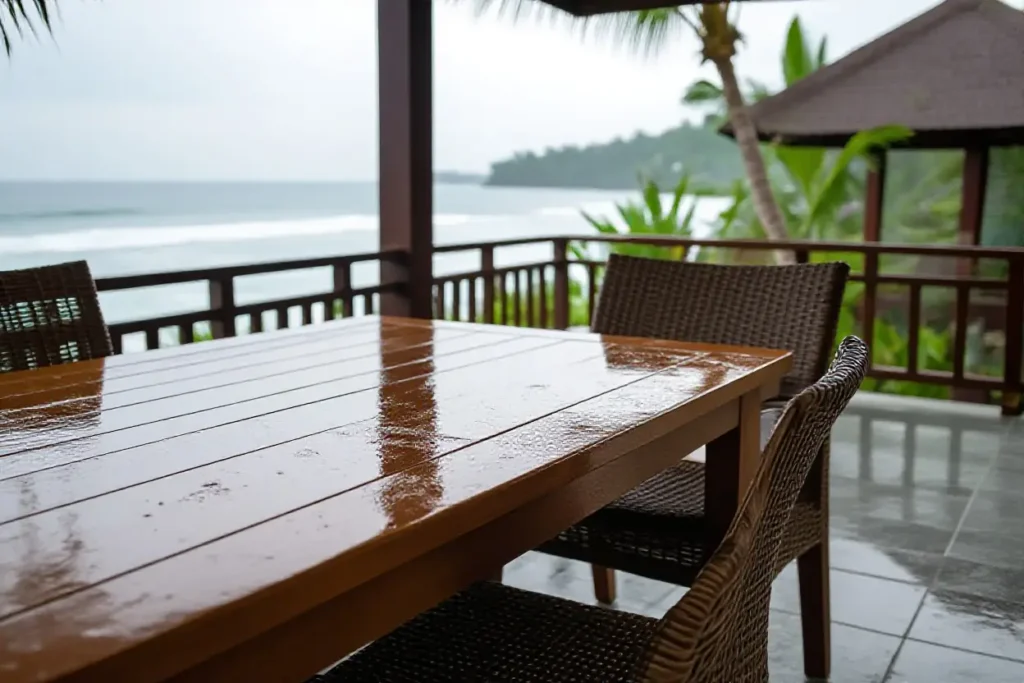
Real teak isn’t a style choice, it’s a survival strategy. Teak’s natural oils repel water and insects, and when sourced Grade-A and kiln-dried to around 10-12% moisture it shrinks and settles instead of cracking wildly. And fabrics? Sunbrella and similar performance textiles resist UV fade and mildew – many lines include a 5-10 year fade/mildew warranty – while Quick-Dry Foam lets water pass through so cushions dry in hours, not days.
Practical example: a Canggu villa we worked with replaced budget cushions every 6-9 months because of mold and soggy cores. After switching to Quick-Dry Foam and Sunbrella covers, replacement moved to a multi-year cycle and guest complaints dropped. So yes, the material choices you make directly affect maintenance time, replacement cost, and how often your outdoor spaces are photo-ready.
More technical detail: insist on teak that is traceable and kiln-dried, ask for a moisture reading (aim for ~10-12%), and specify Stainless Steel 304 for screws and fittings if you’re on most Balinese coasts. Rinse salt off metal and fabrics regularly, store cushions during peak storms, and you’ll extend service life dramatically – small routines that save you big replacement bills.
Comfort Matters – Don’t Settle for Wet Cushions!
Why Cushion Quality Matters More Than You Think
Cheap cushions use indoor foam wrapped in polyester. In humid climates, they:
- Stay wet for 48–72 hours
- Trap odors and mold
- Sag and lose shape quickly
Quality outdoor cushions dry fast, resist mildew, and remain comfortable after rain—critical for guest satisfaction and daily usability.
What Makes Quality Cushions Worth It?
Paying more isn’t about fashion-it’s about engineering. Quality outdoor cushions use Quick-Dry Foam (open-cell or perforated cores) that lets water pass through and ventilate, combined with premium outdoor fabrics like Sunbrella or Ateja that resist UV, mold and salt. In practice that means you can often sit on a cushion within an hour after a heavy shower, instead of waiting days; that alone keeps your villa usable and your guests happy.
Construction matters too: sealed or taped seams, marine-grade zippers and polyester threads stop water from wicking into the foam, and removable covers make cleaning simple. Those features add cost up-front, but they cut replacement frequency and maintenance time-so the higher price quickly becomes an investment, not an expense.
On numbers: if a cheap cushion costs $50 and you replace it twice in two years, you’ve spent $150, whereas a quality cushion at $200 that lasts 4-5 years clearly wins the math. Plus, you avoid health risks from prolonged dampness and you protect your rental’s reputation – both are real dollar savings you feel over time.
Rust Damage: The Hidden Cost of Cheap Hardware
Low-grade screws and fittings corrode fast in salty air:
- Visible rust in under 6 months
- Structural weakening within 1–2 years
- Orange stains on tiles and decks
Marine-grade stainless steel hardware dramatically extends furniture life and reduces maintenance emergencies.
Aesthetic Value: Why Expensive Outdoor Furniture Books Better
Outdoor furniture isn’t just functional—it sells your space. Quality teak lounges and premium fabrics:
- Photograph better
- Hold color and structure longer
- Improve listing CTR and booking confidence
Sagging cushions, peeling rattan, and rust stains kill conversions in seconds.
Many villa owners see better long-term results when outdoor furniture decisions are aligned early with overall space planning. Working alongside Bali Best Design, an architecture and interior design studio focused on tropical villas, helps ensure materials, layout, and durability are considered together—reducing costly changes and improving both performance and aesthetics over time.
How Quality Outdoor Furniture Increases Rental ROI
For villas and short-term rentals:
- Fewer replacements = predictable budgets
- Better photos = higher booking rates
- Higher perceived value = higher nightly prices
Even a small increase in occupancy or nightly rate often covers the premium within 1–2 seasons.
Final Verdict: Should You Buy Expensive Outdoor Furniture?
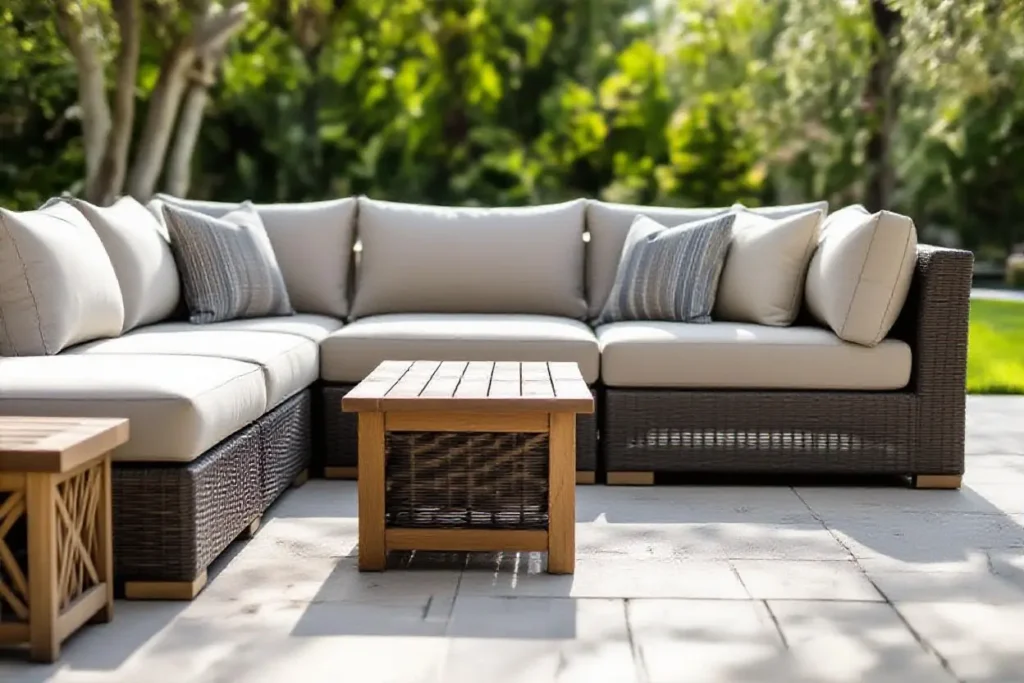
If you live in or rent out property in a tropical or coastal climate, expensive outdoor furniture is not a luxury—it’s a cost-saving investment. Buying cheap usually means buying twice (or three times). Quality teak, quick-dry cushions, and marine-grade hardware last longer, look better, and protect both your time and income.
Invest once. Replace less. Save for years.
❓ FAQ (SEO Long-Tail Boost)
Is teak the best wood for outdoor furniture?
Yes. Teak’s natural oils and dense grain make it one of the most durable woods for outdoor and tropical environments.
How long should quality outdoor furniture last?
Well-made teak furniture with proper maintenance can last 10–25 years outdoors.
Is expensive outdoor furniture worth it for rentals?
Absolutely. It reduces downtime, improves guest reviews, and supports higher nightly rates.