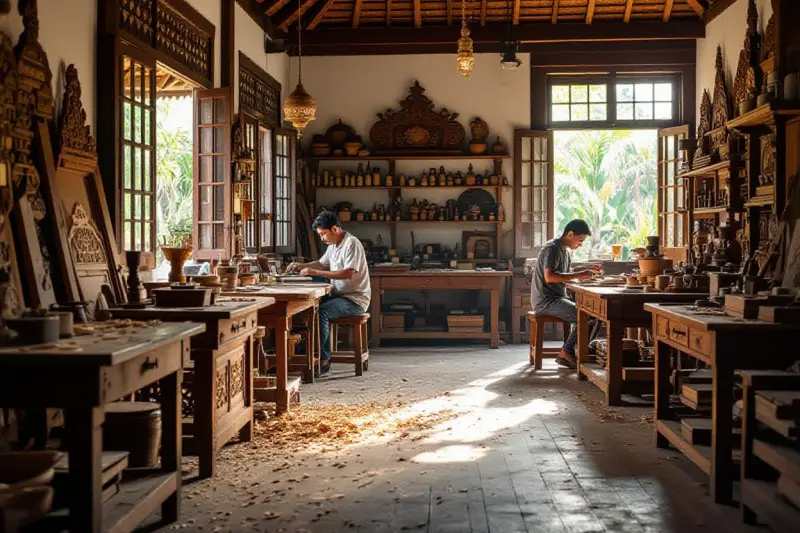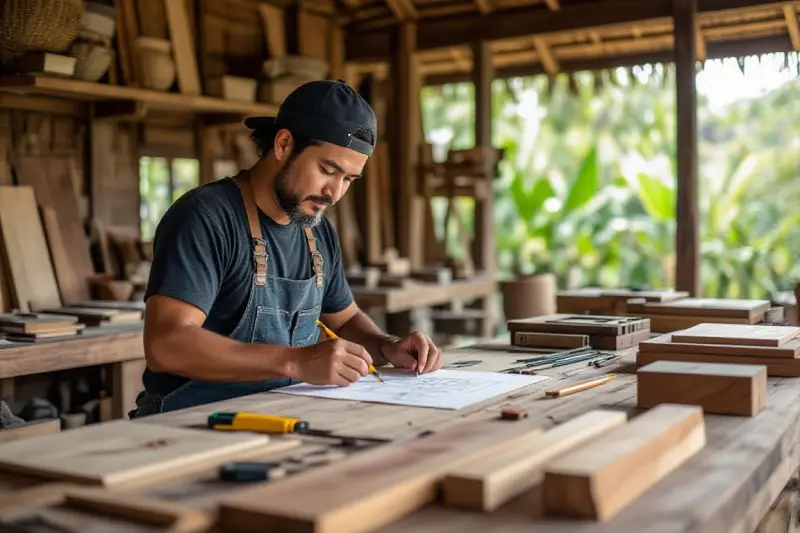
Furnishing a property in Bali—whether it is a private villa, a rental investment, or a family home—requires a keen eye for quality. One of the most common dilemmas homeowners face is choosing between buying readily available furniture or investing in bespoke pieces. Specifically, understanding what distinguishes a Custom Sofa Bali from mass-produced brands can be the deciding factor in the longevity and aesthetic appeal of your space.
While retail furniture offers instant gratification, a Custom Sofa Bali provides a level of durability, personalization, and artisanal value that factory-made items simply cannot match.
Why Go Custom? Here’s My Take on It
The Real Deal About Mass-Produced Sofas
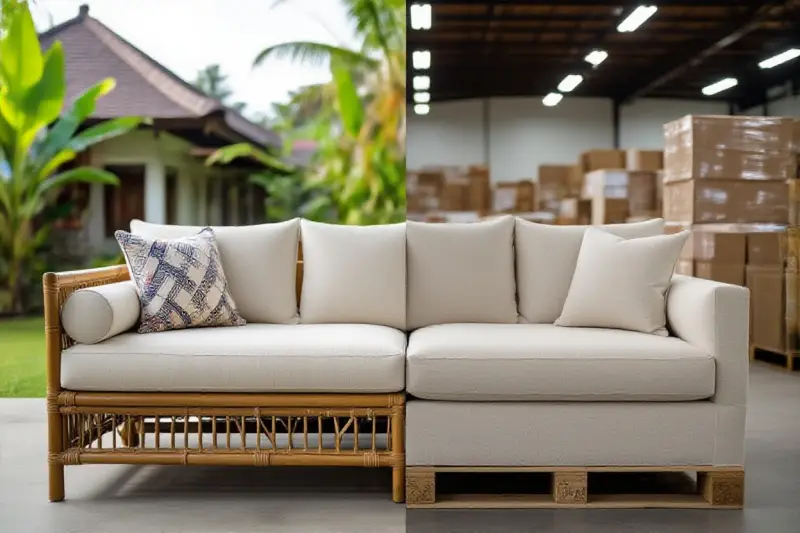
You already know the drill with big-box sofas: you walk in, sit for 30 seconds, swipe your card, and it shows up at your door a week later. The part you do not see is the cheap internal structure that makes that sofa feel tired after 2-3 Bali wet seasons. Frames are usually softwood or MDF stapled together, foam density often sits around 18-22 kg/m³, and fabric is a thin synthetic that starts pilling fast if your villa is a rental and guests are crashing on it every week.
In Bali’s humidity, that kind of build is basically on a timer. You get swelling, joints loosening, sagging seats, and if the frame is not properly treated, you are inviting termites for a long-term stay. So you end up in a cycle where you replace a “bargain” sofa every few years, which quietly becomes more expensive in the long run, especially if you are furnishing multiple villas or upgrading a property for Airbnb or long-stay tenants.
What Makes a Custom Sofa Worth It?
Where custom really pulls ahead is in how it respects both your lifestyle and Bali’s climate. A proper Custom Sofa Bali usually starts with kiln-dried teak or mahogany, moisture content brought down to around 12-14% before your frame is even built, so it does not twist or crack when the rainy season hits. Pair that with high-density foam (30-32 kg/m³ or more) and Dacron wrapping, and you get that “sink in but not disappear” comfort that actually holds its shape for 8-10 years, not 18 months.
Then there’s the practical design side. You can size the sofa to the centimeter so it fits that awkward corner in your Ubud villa or spans the exact width of your Canggu living room, with arm heights that line up perfectly with existing side tables. Want Sunbrella fabric because your sliding doors are always open and the sun blasts your cushions for 4 hours a day? No problem.
Need removable, zippered covers because your property is a rental and red wine accidents are basically guaranteed? That’s built into the concept from day one, not an afterthought.
What most people don’t factor in is how much a custom sofa can directly impact your property’s perceived value and even your nightly rate if you’re renting it out. A well-proportioned, made-to-measure piece instantly makes your photos stronger on Airbnb or Booking.com, and that alone can justify an extra 10-20 USD per night on a 3-bedroom villa.
Over a year of bookings, that’s thousands of dollars tied back to one key item in your living room, which suddenly makes the initial custom price feel a lot less scary and a lot more like a strategic investment instead of just “nice furniture.”
Key Takeaways:
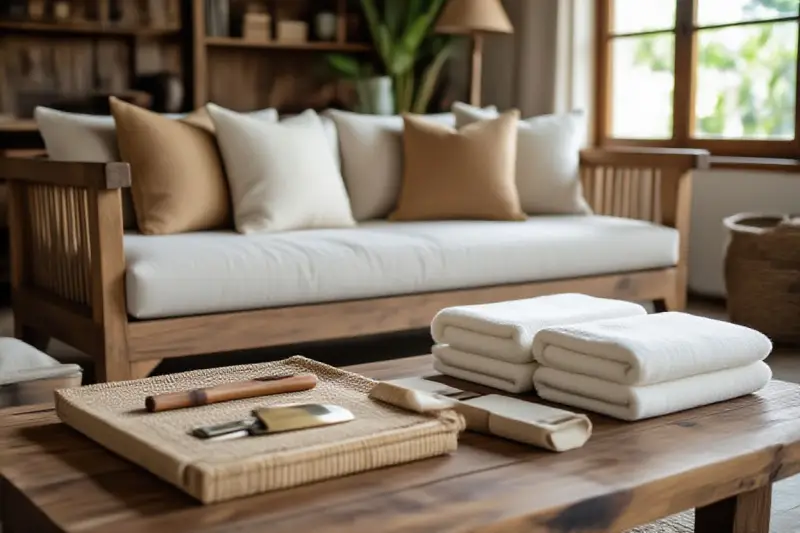
- Picture this: you move into a Bali villa, drop a generic sofa from a big-box store into the living room, and within a couple of wet seasons the frame is wobbling and the cushions are sinking – that’s the big split between mass-produced and a Custom Sofa Bali. Custom makers here usually work with kiln-dried teak or mahogany and proper high-density foam, so the sofa is actually built to survive Bali’s humidity and daily use instead of just looking good for the first year.
- Design-wise, a Custom Sofa Bali lets you flip the script – instead of forcing your layout around whatever size and color the store has in stock, you size the sofa to your room right down to the centimeter, pick fabrics that actually match your walls, curtains, and rugs, and even shape it to guide how people move through the space. That means the sofa becomes a real design tool, not just a big rectangle you’re trying to work around.
- When you work with a seasoned local workshop like Bali Best Buy Furniture, you’re not just paying for a sofa, you’re basically getting a mini design partner who understands tropical materials, outdoor vs indoor fabrics, and how a rental villa or family home really gets used. That combo of craftsmanship, material choice, and back-and-forth consultation is exactly what separates a Custom Sofa Bali from something that rolled off a factory line.
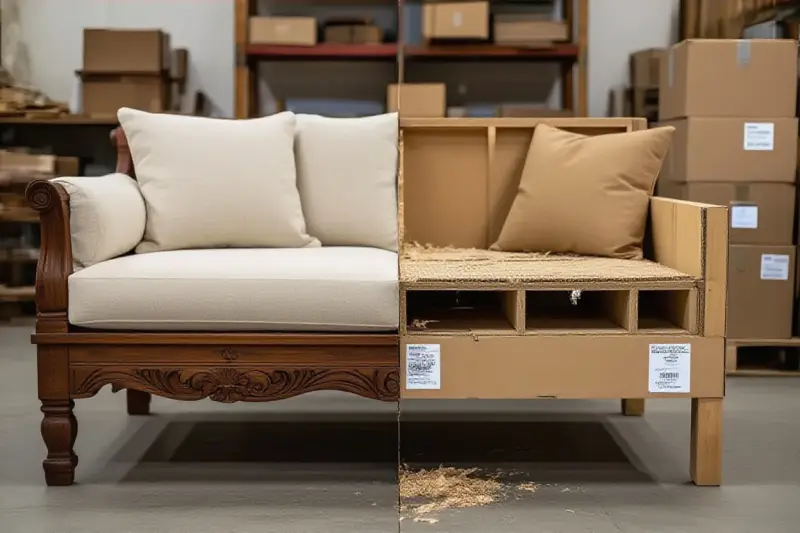
Tips to Spot Quality Materials
You care about how your sofa looks, but what really protects your investment is what you can’t see – the frame, the foam, the fabric backing. When you know a few simple tricks, you can walk into any showroom in Bali and instantly tell if a piece is built to handle tropical humidity, rental guest abuse, and daily lounging or if it will sag and creak within a year.
Instead of relying on sales talk, use a quick checklist whenever you’re checking a Custom Sofa Bali or comparing it to mass-produced pieces:
- Press and lift – check the weight of the frame; solid hardwood will feel heavier and more grounded than particle board.
- Run your fingers underneath – inspect the joinery and corner blocks, not just visible surfaces.
- Sit, bounce, and slide – test the foam resilience and how quickly cushions recover their shape.
- Look at fabric weave up close – denser upholstery fabric with a tight weave usually outlasts thin, shiny synthetics.
- Ask directly for foam density and wood species in writing, especially for rental properties that see high turnover.
Any villa or home where you apply these checks will feel more solid, more comfortable, and far more “expensive” for years without constant repairs.
How to Identify Solid Hardwood vs. Particle Board
Frame material is where most mass-produced brands quietly cut costs, so this is the first place you should investigate. Flip up a seat cushion or feel underneath the sofa and check the exposed frame – solid hardwood like Teak or Mahogany will show natural grain, slight variations in color, and you’ll often see proper joints instead of flat, uniform sheets. Particle board, MDF, and cheap plywood usually have a perfectly smooth, almost “compressed paper” edge with no visible grain and you might spot chipping or flaking around screw holes.
Weight is another giveaway: a 2.5 meter Custom Sofa Bali in kiln-dried Teak will feel noticeably heavier than a similar sized sofa built with softwood or engineered board, you’ll need two solid people to move it. Also tap on the frame – hardwood has a tighter, sharper sound, while hollow sections or particle board sound dull and a bit “cardboardy”. Any frame that flexes when you lift a corner, creaks when you sit, or shows swelling at the bottom near the floor in Bali’s humidity is a red flag that you’re not dealing with true solid hardwood.
Understanding Foam Density – What’s the Difference?
Cushions are where comfort either shines or dies, and that comes down mostly to foam density. In Bali’s heat, low-density foam (around 18-22 kg/m³) will feel soft on day one, then within 6-12 months you start seeing permanent dips in your favorite spot, especially on rental sofas that get constant use. Higher-density foam in the 28-32 kg/m³ range, which is what good custom makers use, keeps its shape far longer and when wrapped with Dacron it still feels plush on top without that “sinking into a hole” effect.
So when you’re talking to a maker, always ask for the specific numbers, not just “high quality foam” as a vague promise. In practical terms, you’ll feel the difference by simply sitting: high-density, high-resilience foam gently pushes back and recovers quickly when you stand, while cheap foam stays compressed for a few seconds and feels a bit spongy around the edges.
Any cushion that you can easily fold in half with one hand or that wrinkles and deflates after you stand up is almost guaranteed to be low-density and short-lived.
On top of that, you want to match foam density to how the sofa will actually be used, not just accept a one-size-fits-all solution from a catalog. For example, a deep lounge sofa in a private villa might use a combination like 32 kg/m³ for the seat with a softer topper so you get that sink-in feeling, while a rental villa sofa or lobby seating in Bali is better with firmer 30-35 kg/m³ foam to handle constant traffic and people of different weights without collapsing.
Any time a supplier in Bali can clearly explain their foam density choices and show you labeled samples to sit on, you know you’re dealing with a builder that cares about long-term comfort, not quick sales.
How Custom Sofas Can Transform Your Space
A well-designed custom sofa quietly controls your entire room. You might think it is “just seating,” but in a Bali villa or compact apartment, it actually dictates how you move, where you gather, and what you notice first when you walk in.
When you work with a Custom Sofa Bali maker, you are not only choosing size and color, you are deciding sightlines to the pool, how much floor you keep visible, and where natural light lands. That is a huge upgrade from dragging a random 230 cm retail sofa around the room and hoping it fits.
In practical terms, a custom piece lets you solve problems that off-the-shelf brands simply ignore. You can stretch a low-profile sofa along a 4.2 meter wall to visually elongate a narrow room, or use a deeper 110 cm seat to double as an extra bed for guests in your rental.
You can even specify arm height so side tables sit flush, which sounds nerdy but instantly makes your space feel “designed”, not improvised. And when the structure is solid teak and high-resilience foam, you’re not rearranging junk every 2 years… you’re editing a long-term layout.
Can a Sofa Actually Change Your Room’s Flow?
Flow is basically how easily you and your guests move without bumping into corners or each other, and yes, your sofa is usually the biggest traffic cop in the room. If you drop a 3-seater from a mass brand into a Bali open-plan living area, it often blocks 40-60 cm of circulation you really need between kitchen, terrace, and pool. With a Custom Sofa Bali, you can pull that back to a more comfortable 80-100 cm walkway, which is the sweet spot designers use so people can pass with drinks in hand without twisting sideways.
Think about an L-shaped layout in a villa: a standard configuration might slice your space in half, but a custom L can be cut 20 cm shorter on one side and raised on slimmer legs to keep sightlines open. Suddenly the room feels “lighter”, airflow improves, and you are not doing that awkward shuffle behind people to reach the garden. And because you can choose seat depth, you avoid that common problem where the sofa sticks too far into the room, crunching your rug area and making the whole space feel cramped.
Why Fabric Choices Matter More Than You Think
Fabric is not just about color, it changes how long your sofa survives Bali and how much maintenance you sign up for every week. In a humid, salty-air environment, a cheap polyester blend can start to pill and discolor in under 12 months, especially in rental villas with constant use. When you specify performance fabrics like Sunbrella or similar outdoor-grade textiles for indoor-outdoor spaces, you get UV resistance, mildew resistance, and way easier cleaning, which can literally double or triple the lifespan of your sofa covers.
Then there is the way fabric affects comfort and perception of luxury. A tight-weave linen blend at 300-400 g/m² feels cool on the skin and sits beautifully in a tropical setting, while a heavier bouclé or velvet in a media room instantly makes the space feel more cocooned and high-end. Color and texture also drive your entire palette:
that soft sand-colored linen might let you run a calm, neutral scheme across walls and curtains, whereas a deep terracotta or olive green fabric can anchor the whole villa and hide stains in a busy Airbnb turnover schedule.
On a more practical level, you also want to think about rub count (often listed as Martindale) and cleaning codes before you commit, especially if your property is rented out. If you go for at least 25,000+ Martindale for light residential use and 40,000+ for rentals, you drastically reduce visible wear on seat cushions in high-traffic zones, which saves you from replacing covers every season.
Pair that with removable, zippered cushion covers and a fabric that can handle water-based cleaning, and you suddenly have a sofa that is not only beautiful but also built to survive kids, guests, pets, and Bali’s climate without constant drama.
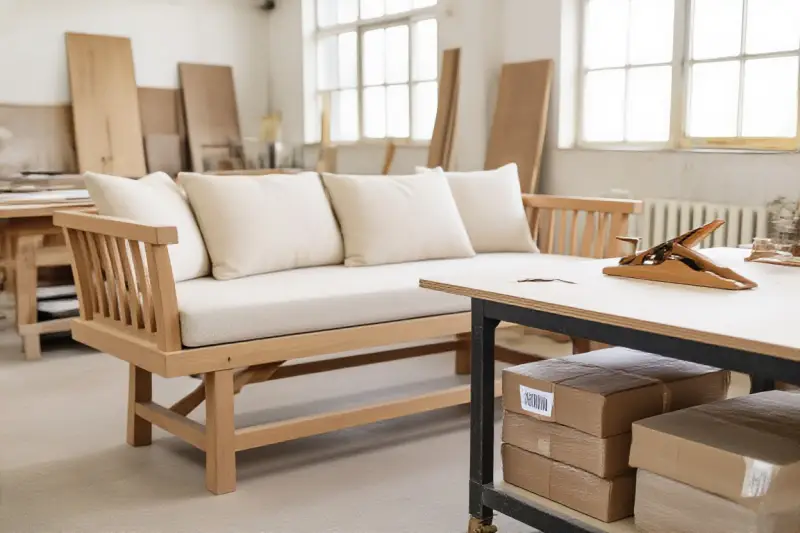
The Importance of Expert Craftsmanship
Your sofa is only as good as the hands that build it, and in Bali that difference shows up fast in the tropical climate. When a skilled artisan is shaping kiln-dried teak, they’re not just cutting wood, they’re reading the grain, anticipating where tiny cracks might appear in 2 or 5 years, and adjusting joints so your sofa doesn’t start squeaking the first time your guests plop down with a cocktail.
You feel that in the way a custom frame sits completely level on polished terrazzo floors, how the arms don’t flex when you lean your full body weight on them, and how the cushions still spring back after thousands of Netflix nights.
In real projects around Canggu and Uluwatu, you’ll see the contrast: mass-produced frames often loosen within 18-24 months, while well-built custom sofas from experienced Bali makers stay structurally solid for 10 years or more with basic care. That kind of longevity isn’t magic, it’s joinery – mortise-and-tenon, proper corner blocking, screws where screws belong and glue where glue actually makes sense.
Add in hand-stitched upholstery, pattern-matched fabrics, and properly balanced seat depth, and you don’t just get something that looks pretty on day one, you get a sofa that still feels tight, supportive, and luxurious after hundreds of turnovers if you’re running a villa.
Should You Really Trust Just Any Maker?
Not every workshop that can staple fabric to a frame should be trusted with your villa centerpiece, and Bali has its fair share of “Instagram factories” that look good but cut corners where you can’t see them. Some will offer you what sounds like a bargain, then quietly swap solid teak for mixed softwood or unseasoned lumber, skip proper kiln drying, and use generic low-density foam just to hit a price point.
You only discover the truth when your sofa starts wobbling after one rainy season, or the fabric stretches weirdly because the internal support webbing was cheap and poorly installed.
You’re not just trusting someone with a piece of furniture, you’re trusting them with your daily comfort and your property’s reputation if you’re renting it out. A careless maker might staple fabric directly into end grain, use thin plywood for the seat base, or apply a finish that flakes under Bali’s UV-heavy sun.
A serious craft-focused builder will walk you through frame specs, foam density (typically 32-40 density for long-term comfort), fabric rub counts, and show you actual samples – not just pretty moodboards. If a maker can’t explain how they protect your sofa from humidity, termites, and heavy guest use, they haven’t earned your trust.
Why Experience Counts When Choosing a Builder
Time in the workshop teaches things no catalog can, especially in a place like Bali where humidity hits 80% and salt air creeps into everything. A builder with 15-20 years under their belt has already seen what happens when foam is too soft for rental use, when inferior screws corrode near the coast, or when fabric without proper backing starts sagging under daily use. So they pre-empt those failures by speccing kiln-dried teak at 10-12% moisture content, rust-resistant hardware, and high-resilience foam that keeps its shape for 7-10 years, not 18 months.
Experienced makers also know how people actually live on a sofa in Bali, which is very different from a staged showroom in a mall. They’ve built for big family villas in Berawa, narrow living rooms in Seminyak, and sprawling indoor-outdoor lounges in Ubud, so they instinctively tweak seat height, arm width, and overall depth to fit barefoot, laid-back island living.
When you say you want a 3-seater, they’ll push back a bit, ask about your floor plan, measure that slightly odd wall, then maybe recommend 260 cm instead of 240 so it visually anchors the space. That mix of technical know-how and lived design experience is what turns a nice-looking sofa into the piece everyone fights to sit on.
With someone who’s been building in Bali for decades, you also gain access to all their “lessons paid for in mistakes” long before you came along. They’ve tested which imported velvets fade fastest in west-facing villas, which outdoor fabrics actually handle year-round exposure without turning chalky, and which foam densities work best for different guest profiles (short-stay rentals vs long-term residents, for example).
You can lean on that database when choosing your own specs: maybe a slightly firmer core with a softer topper so the sofa feels plush but doesn’t collapse over time, or a tighter back cushion style if you’re hosting a lot of remote workers who’ll sit for hours. That’s the quiet power of experience – you skip the trial-and-error phase and land directly on a build that suits your lifestyle, your property type, and Bali’s climate in one shot.
What Sets Bali Best Buy Furniture Apart?
How They’ve Earned a Solid Reputation
What makes one workshop in Bali quietly supply villas, resorts, and private homes for 20 years while others come and go every season? In your case, it often comes down to how consistently they deliver exactly what you asked for – on time, on budget, and built to survive both guests and humidity. Bali Best Buy Furniture has shipped custom sofas to more than 15 countries, and a lot of that work comes from referrals, which tells you a lot: interior designers and villa owners don’t keep recommending someone who messes up measurements or comfort levels twice.
You also get something most mass-market brands never bother with: detailed, project-based communication. Instead of a vague “3-seater, grey fabric,” you’re looking at scale drawings, frame specs, foam density ratings, and fabric swatches that are actually tested for Bali’s climate. They’ll walk you through specifics like quick-dry foam for a pool deck rental, or double-stitching on high-traffic villa sofas that see 200+ guests a year. That mix of nerdy technical detail plus real-world experience is exactly how they’ve built a reputation that actually means something.
Seriously, What Makes Their Custom Sofas Unique?
What happens when a sofa is built for your actual life instead of a factory production line? With Bali Best Buy Furniture, your Custom Sofa Bali starts with the frame and goes all the way down to how you like to sit on a Sunday afternoon. They’ll literally tweak seat height by 1-2 cm if you’re taller, or increase seat depth for that deep-lounge, movie-night feel.
For a 3-bedroom villa, you might end up with a 260 cm L-shape, 90 cm depth, kiln-dried teak frame, and a specific foam combo that’s firm at the base and softer on top so you don’t sink or slide.
Instead of generic fabric books, you’re choosing from performance textiles that match your property’s actual use: Sunbrella or similar for salty, seaside decks, durable polyester blends for high-turnover rentals, or soft linen-cotton for a private home where you care more about feel than maximum stain resistance.
They’ll even guide you on whether to go for fixed cushions (cleaner lines, more tailored) or loose cushions (easier to wash and flip) based on how many people will use the sofa and how often you’ll realistically maintain it. If you want to dig deeper into this kind of decision-making, check out Custom vs. Mass-Produced Sustainable Furniture for more context around long-term value.
On top of all that, the small but important details stack up in your favor: hidden interior supports on longer spans so the seat never bows, velcro or zipper systems that make cushion covers actually removable (not just in theory), and feather or microfibre toppers if you love that sink-in feel without sacrificing structure.
So you’re not just ordering “a sofa”; you’re designing a piece that fits your floor plan, your guests, your cleaning habits, and even your long-term rental strategy, instead of forcing your life to adapt to whatever came off the truck last week.
My Favorite Features of Custom Sofas
Little Extras that Make a Big Difference
What if the features you barely notice at first are actually the ones that make you love your sofa 5 years from now? With a Custom Sofa Bali, you get to dial in those tiny details that mass brands simply don’t bother with. Think hidden storage under the chaise for spare linens, USB ports tucked discreetly into the arm for late-night charging, or a slipcover system with labeled zips so your cleaner doesn’t spend 2 hours trying to put it back together. In one Canggu rental villa, adding just 2 pull-out trundle sections under a long sofa created sleeping space for 2 extra guests without adding a single extra bed to the room.
Even the “boring” stuff becomes your secret weapon when you customize it. You can specify double-stitched seams on high-stress corners, opt for Velcro-secured seat covers so they don’t migrate every time you sit, and choose stain-resistant fabric like Sunbrella or performance linen that shrugs off red wine and turmeric curry – very Bali problems, very real solutions. Those little extras don’t shout for attention on Instagram, but they quietly save your sofa, your time, and frankly your sanity.
The Comfort Factor You Didn’t Know You Needed
Have you ever sat on a sofa that looked amazing but your back started complaining after 15 minutes? Comfort is where a Custom Sofa Bali really shows its value, because you can fine-tune things that mass-produced brands treat as “one-size-fits-all.”
You can choose seat depth to the centimeter so your feet actually touch the floor, adjust back cushion height so your shoulders are supported, and pick foam density based on how you like to sit – sink-in soft for movie nights, or firmer high-resilience foam if you work on the sofa with a laptop. Bali Best Buy Furniture often mixes densities in one piece, with a firmer core and softer top layer, which gives you that cloud feel without the sagging that usually shows up after year two.
On top of that, you get to design comfort around Bali’s climate and your lifestyle, not some generic European apartment mock-up. Quick-Dry Foam for outdoor lounges means your cushions don’t stay soggy for days after a tropical downpour, while breathable cotton-linen blends on indoor sofas stop you from feeling sticky after 20 minutes of sitting.
And if you’re tall, short, or have back issues, you can literally ask for custom lumbar bolsters, wider armrests to act as side tables, or a chaise length that matches your actual height. That kind of tailored comfort is the stuff you didn’t even know you were missing until you sit on a sofa built for your body instead of a showroom display.
Because comfort is so personal, you really want to treat your Custom Sofa Bali like a fitted garment, not a free-size T-shirt. Spend time testing different foam densities (for example, many clients end up around 32-35 density for seats and slightly softer for backs), sit on mock-ups if your maker offers them, and think about how you actually use the sofa: do you lie down to watch Netflix, host groups of 6-8, or curl up in the corner with a laptop.
When you match seat height, depth, and cushion structure to those real habits – plus consider Bali-specific factors like ceiling fans, humidity, and cross-breeze – you end up with a piece that’s not just aesthetically pleasing but genuinely supportive for hours of daily use, year after year.
FAQ
Q: What makes the construction of a Custom Sofa Bali so different from mass-produced sofas?
A: Over 70% of mass-market sofas use engineered wood or MDF in the frame, which is basically fine for a couple of years, but not great for Bali’s humidity and daily use. A Custom Sofa Bali usually starts with kiln-dried solid hardwood like Teak or Mahogany, so the skeleton of your sofa is actually built to handle moisture, kids jumping on it, and long Netflix nights without twisting or squeaking.
Most factory sofas are designed with a 2-3 year lifespan in mind, so they use low-density foam that feels comfy at first, then slowly turns into a pancake. Custom pieces in Bali typically use high-density rubber foam with a Dacron wrap, which keeps its shape a lot longer and gives that slightly firm but super supportive sit most people end up preferring. You feel it especially in the seat depth – mass-produced brands go generic, custom makers size it to your legs.
Another big thing is the joints and finishing. Custom workshops in Bali often use proper joinery and extra reinforcement on load-bearing points instead of relying mostly on staples and glue. That might sound technical, but it means fewer sagging corners, less wobble, and way less “why does this arm feel loose already?” panic. In other words, the internal build is treated like long-term furniture, not temporary decor.
Q: How does a Custom Sofa Bali improve the look and flow of a villa or home compared to off-the-shelf options?
A: Bali Interior designers will tell you that sofa proportions can make or break a room in about 3 seconds, and they’re not exaggerating. With a Custom Sofa Bali, you’re not forced to work around a fixed size or color; instead, the sofa is tailored to your actual floor plan, your traffic flow, and even how you like to lounge or host guests.
In an open-plan Bali villa, for example, a custom L-shaped sofa can be measured to the centimeter to double as a subtle room divider without blocking circulation. You can tweak back height so it doesn’t kill your beautiful view, set seat depth so shorter guests’ feet actually touch the floor, and adjust the length so it lines up cleanly with walls or sliding doors. That kind of precision just doesn’t happen with a boxed sofa from a warehouse.
Styling-wise, custom lets you dial in harmony instead of “close enough”. You can pull fabric shades that echo your curtains, pick textures that work with your stone floors or timber ceilings, and choose cushion fills to match the vibe – relaxed and slouchy for a beachy rental, or more structured for a sleek modern home. When everything ties together like that, the sofa stops being a random purchase and starts feeling like it belongs to the architecture.
Q: Why do buyers in Bali choose makers like Bali Best Buy Furniture over big-brand imports?
A: Two decades of working with tropical climates teaches a furniture maker a lot about what fails fast and what actually lasts, and that experience is exactly what brands like Bali Best Furniture build on. They’re not just churning out generic models; they understand how Teak moves in humidity, how certain foams react to heat, and which finishes survive open-air living spaces without looking tired after one rainy season.
When you work with a custom shop like that, you typically get a consultative process instead of a sales pitch. You show photos, talk about how you use the space, maybe share your Airbnb or villa concept, and they help you balance aesthetics with practicality – like using Quick-Dry Foam for outdoor lounges, or choosing Sunbrella for sun-exposed terraces while saving softer linens for shaded indoor sofas. Those little tweaks are what keep a sofa looking fresh instead of moldy or faded.
And the big payoff is value over time. A mass-produced sofa might feel cheaper up front, but if it sags, peels, or warps after a couple of Bali seasons, you’re buying again. A Custom Sofa Bali from a seasoned maker is built more like an heirloom piece, so you spread that investment over a lot more years, with a design that’s actually your style – not just whatever container load happened to arrive that month.