Over in Bali, a lot of people think you’ve got to pick between a pretty designer sofa or one that actually feels good to sit on, but that trade-off’s kinda outdated now. When you dial in a custom couch, you’re not just buying something that vaguely fits your villa – you’re shaping every detail around how you live, how you lounge, how your guests hang out. In this guide, you’ll cut through the noise and see which Bali makers really nail that sweet spot between style and serious comfort.
Key Takeaways:
- People often assume all Bali couch makers are kind of the same, but the real standouts are the ones mixing solid kiln-dried hardwood frames with high-resilience foam and proper upholstery work, so you get that sweet spot where your sofa actually supports your body and still looks villa-worthy on Instagram.
- The makers that really nail style-comfort balance, like Bali Best Buy Furniture, treat your sofa like a mini engineering project – dialing in seat depth, cushion firmness, and fabric choice around how you actually live, whether that means lounging with pets, hosting guests, or kitting out a rental villa that has to survive constant use.
- If you want the best blend of style and comfort in Bali, you’re basically looking for three things in one place – top-tier materials suited to the climate, near-limitless customization on layout and aesthetics, and direct-from-manufacturer pricing – and that combo is exactly why Bali Best Buy Furniture keeps coming up as the go-to custom couch hub on the island.
Why Custom Couches Are the Way to Go
Instead of squeezing your life around a standard 3-seater, you let the sofa adapt to your actual space and habits. In Bali, that might mean a 280 cm low-profile sectional that lines up perfectly with your sliding glass doors, or a shallow 70 cm depth so guests at your rental villa can sit upright with a drink instead of sinking into a movie lounger. When you go custom, things like seat depth (55 vs 65 vs 80 cm), arm height, cushion density, and even leg clearance stop being fixed rules and become design tools you can play with.
On top of that, you get to engineer comfort for your climate, not for a generic air-conditioned showroom. You choose quick-dry foam for that open-plan living room that catches ocean spray, or denser HR foam for a super-supportive TV sofa you use every night. You can pair kiln-dried teak frames with removable, washable covers for high-turnover Airbnb villas, or go full luxury with feather blend toppers in a private residence. Same island, same makers – totally different results, because the piece is built around how you actually live.
Say Goodbye to Compromise
Mass-produced couches basically say, “here are three sizes, take it or leave it”, which is exactly how you end up with armrests blocking a sliding door or a chaise that sticks awkwardly into a walkway. With a custom build, you flip that script. If your living room wall is 317 cm, your sofa can be 317 cm – not 300, not 320, literally wall-to-wall, with the corner angle tweaked so it clears your existing coffee table by 30 cm. That sort of millimeter-perfect fit is normal for good Bali workshops, not some crazy VIP upgrade.
You also stop having to choose between pretty-but-impractical and practical-but-ugly. Say you love a creamy linen look but run a pet-friendly villa in Canggu: a retail store will shrug, a proper custom maker will show you 30+ performance fabrics that mimic linen but hit 30,000+ Martindale rub count and come with stain-resistant coatings. Want a sink-in movie sofa for you, but firmer seats on the same piece for your parents when they visit? They can literally mix foam densities by seat so everyone’s happy on the same couch.
Tailored Just for You
Every decision in a custom build starts with your body, your routines, your space layout, not with what fits into a container. If you’re taller, you can bump the seat depth to 75 or 80 cm so you’re not perched on the edge; if you prefer a more formal sit, you can lock it at 60 cm and raise the back cushions to 45 or 50 cm so your spine is fully supported. Villa owners in Uluwatu often ask for extra-wide chaises, 100 to 110 cm deep, so two people can lounge side-by-side facing the view – that’s the kind of spec retail sofas simply don’t offer off the shelf.
Then there’s the aesthetic side of the tailoring. You pick if you want slim 4 cm steel legs for a light, Scandi vibe or chunky 10 cm teak block legs that visually ground the sofa in a big open-plan space. You decide if the cushions are tight and boxy or relaxed with a slightly slouchy, beach-house feel, and whether the stitching is invisible or highlighted with contrast piping. In Bali workshops that know what they’re doing, those aren’t “special requests” – they’re just part of the everyday conversation about how your couch should look and feel.
When you drill deeper into the “Tailored Just for You” side, it even extends to how the sofa works across seasons and guests, not just how it looks on day one. You can spec double sets of covers – one durable, darker set for high season rentals and a softer, lighter set for your own stays – and have the maker grade the pattern so everything fits perfectly when you swap.
You can integrate hidden zippers for easy cleaning, specify kid-proof radius corners instead of sharp ones, or design individual modular pieces that can be reconfigured from a giant 4-meter island for retreats into smaller sofas for long-term tenants, all built off one master drawing so everything locks together cleanly for years.
What’s the Secret Sauce for a Great Custom Couch?
Quality Materials Really Matter
Picture this: you walk into a villa in Canggu, the sofa looks gorgeous in photos, but when you sit, the arm wobbles and the seat feels like an old mattress from a guesthouse in 1998. That usually comes down to materials, not design. For your custom couch Bali, you want a solid kiln-dried hardwood frame (Teak is king in Bali, with moisture content typically brought down to around 12-15% so it does not crack or twist in the humidity) and proper joinery, not just glue and a few random screws. When a maker in Bali tells you they are using “mahoni” (Mahogany) or “jati” (Teak), ask if it is Grade-A and kiln-dried – if they can not answer clearly, that is a red flag.
On top of that frame, the next non-negotiable is foam quality. You will see cheap couches use 18-20 density foam that feels OK for 3 months then collapses into a sad pancake. You want at least 28-32 density high-resilience foam for the seat, ideally wrapped in Dacron so it looks full and keeps its bounce. For outdoor sofas, quick-dry foam plus UV-resistant fabrics like Sunbrella or good polyester-blends are necessary, otherwise Bali’s sun and rain will chew through your cushions in a single wet season. Your goal is simple: a frame that can last 10-15 years and cushions you only need to refresh every few years, not every high season.
The Importance of Comfort and Ergonomics
Think about the last time you sat on a stunning sofa that looked like a magazine spread but after 20 minutes your lower back was silently screaming. That is what happens when ergonomics get ignored. With a custom couch, you can dial in seat depth (usually 55-65 cm for “normal” seating, 70-90 cm if you love to lounge), backrest height, and cushion firmness to match how you actually sit, not how some catalog model is posed. If you are tall, you might push for deeper seats; if you are hosting a lot of older guests in your villa, you might keep the seat slightly higher (around 45-48 cm) so it is easier to stand up.
Even small tweaks make a big difference to your everyday comfort. A 2-3 cm tilt on the backrest, softer back cushions paired with firmer seats, armrests that are the right height for your shoulders when you are scrolling Netflix… it all adds up. Bali Best Buy Furniture, for example, will literally have you test different foam densities and seat heights in the showroom, then translate those numbers directly into your custom build. You are not guessing. You are programming comfort into the design from day one.
So when you talk ergonomics with your maker, treat it like a mini fitting session, almost like tailoring a suit. Share how you use the sofa: Do you work on your laptop there, nap sideways, host movie nights, rent the villa out to digital nomads who basically live on the couch? Ask for sample measurements: standard seat depth vs lounge depth, standard vs “cinema” backrest angle, soft-medium-firm cushion options.
The more specific you are about how your body interacts with the sofa, the better your builder can tweak the angles and padding so you do not just like how your custom couch looks – you actually love how it feels at hour three of a Sunday afternoon marathon on it.
My Go-To Place for Custom Couches in Bali
Why Bali Best Buy Furniture Stands Out
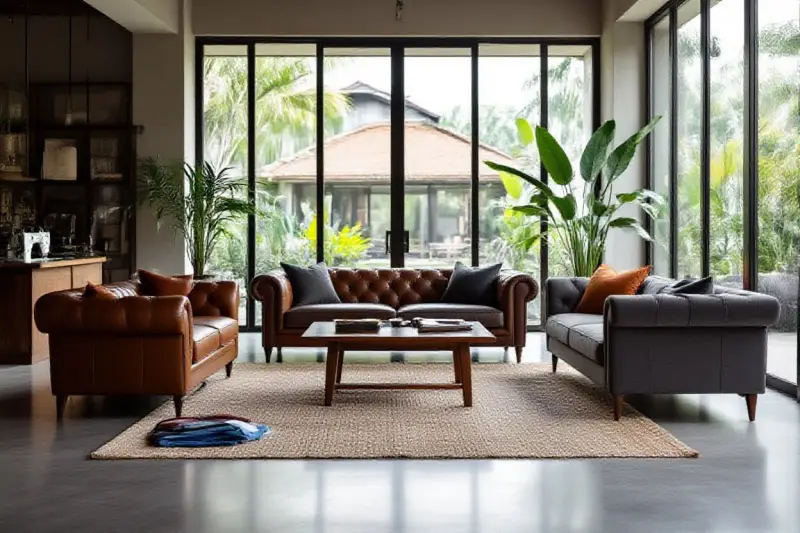
Over 70% of the custom couch projects you see in high-performing Bali villas (the ones actually booked solid on Airbnb and Booking.com) come from just a handful of workshops, and Bali Best Buy Furniture is right in that core group. You notice it the moment you sit down – the seat depth hits that sweet 55-65 cm range where you can properly lounge, but still sit upright with a laptop or a drink without slouching into oblivion.
You’re not guessing either, because during the design stage they literally walk you through those dimensions, test cushions with you in the showroom, and tweak the foam density if you prefer a firmer “hotel lobby” feel instead of a super cushy movie-night sofa.
What really makes them your go-to, though, is how they handle all the annoying details you probably don’t have time for. You show up with a Pinterest board and a rough room measurement, and they’ll turn that into a scaled drawing, calculate exact lengths so your chaise doesn’t block the sliding door, and even suggest modular layouts if your villa is a rental and you know guests will move things around.
Because you’re dealing directly with the production hub, you get workshop pricing, yet the finishes – double stitching on stress points, Velcro or zipper cushion covers for easy cleaning, proper anti-rust hardware – all feel like something you’d expect from a premium European brand.
The Mastery of Local Craftsmanship
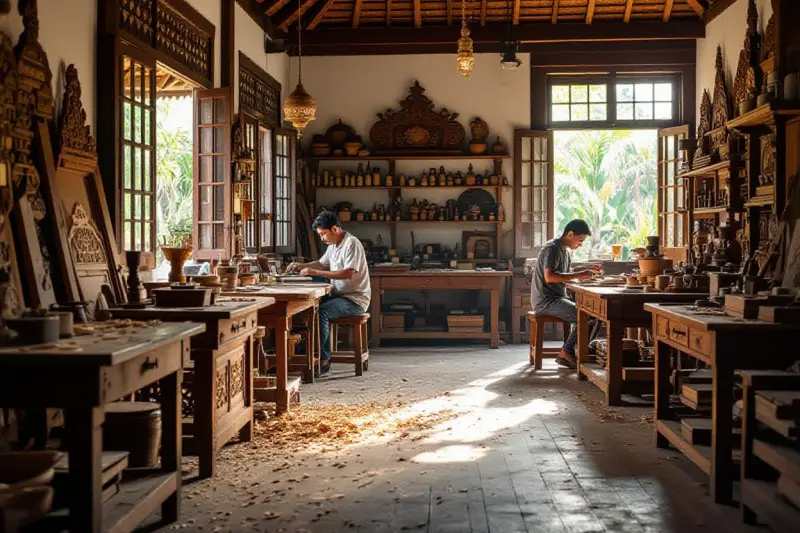
A single 3-seater couch in their workshop can pass through 8 to 10 different hands before it even sees fabric, and that layered expertise is exactly what you feel when you sit down. You’ve got Jepara-trained carpenters handling the joinery, Bali-based upholsterers taking care of the fabric tension and pattern matching, and finishing specialists dealing with sanding, staining, and protective coating in Bali’s humidity.
It’s not a one-man show banging together a frame in the back of a shop – it’s a proper production line where each step is owned by someone who’s been doing that one thing for years.
Because most of these artisans grew up around wood and rattan, they’re ridiculously good at those tiny adjustments that make your couch feel custom, not generic. You might ask for a floating-back sofa for a modern villa, and they’ll subtly thicken the back rail and tweak the leg position so it doesn’t wobble on Bali’s not-always-perfect tile floors.
Or you’ll want a low Japanese-inspired profile, and they’ll automatically adjust the pitch of the backrest so you can lean for hours without killing your lower back. You give them your vision, and they translate it into real-world construction that can actually survive daily use, kids, pets, guests, and the climate.
So when you hear “local craftsmanship” here, it’s not just a buzzword slapped on a brochure; you’re tapping into a network of makers who understand how Teak reacts in the wet season, how foam density holds up in open-air living rooms, and how to build a couch that still looks tight and structured even after hundreds of people have flopped on it during a high-occupancy rental season. That depth of hands-on experience is what turns your custom sofa from a nice idea into a piece that quietly earns its keep, year after year.
How to Get Your Dream Couch
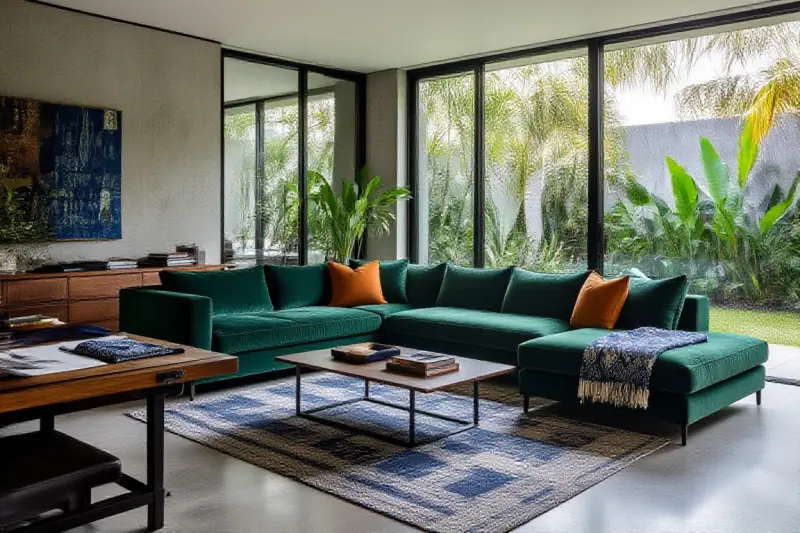
Ever wondered what the actual step-by-step path looks like from “idea in your head” to “feet up on your new couch”? You are not just handing over money and hoping for the best here – with a serious custom maker in Bali, you are actively steering every choice so the end result fits like it was born in your living room. By the time you sign off on the final sketch, you will know the exact dimensions in centimeters, the foam density in kg/m³, and even how many meters of fabric your design is going to swallow.
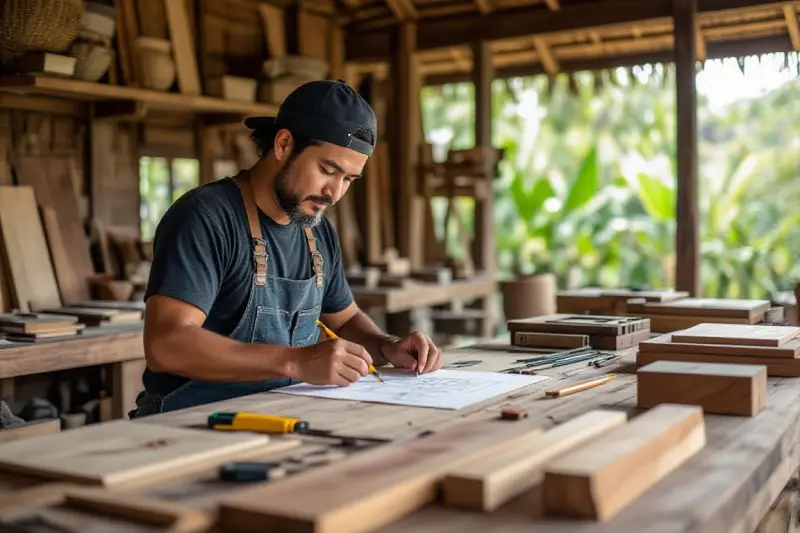
Instead of getting lost in vague Pinterest dreams, you narrow things down fast: photos of 2 or 3 reference sofas, your room measurements, and a quick chat about how you actually sit, nap, or work on the couch.
From there, Bali Best Buy Furniture turns it into a proper technical drawing, clarifies the seat depth (say 60 cm for more formal seating or 75 cm for that Netflix-lounge feel), and confirms the frame wood and finish. Within a day or two, you have a clear quote, a timeline, and a production plan – no guesswork, just a straight line from idea to install.
The Easy-Breezy Ordering Process
So how do you go from “I kinda want a comfy L-shape” to “my custom sofa is locked in and on the schedule” without losing your mind? You start with the basics: send your villa or apartment measurements (a quick phone photo of a hand-drawn plan works), any inspiration pics, and a rough budget. In most cases, within 24 to 48 hours you will get a first proposal that includes a 2D layout, suggested sizes like 280 x 180 cm for an L-shaped sectional, seat height options (usually 40 to 45 cm), plus fabric recommendations based on kids, pets, or rental use.
From there, it is a bit like fine-tuning a playlist – tweak the seat depth, change the armrest thickness, maybe shift from a 3-seater plus ottoman to a clean U-shape.
Bali Best Buy Furniture usually confirms everything in a simple order sheet: dimensions in centimeters, frame material (for example kiln-dried teak), foam density (32-35 kg/m³ for everyday lounging), fabric brand and color code, and hardware details if you are doing a modular piece. Once that is signed off and your deposit is paid (commonly 50%), your couch moves from idea phase into the actual production queue.
What to Expect During Production
What actually happens in those 3 to 5 weeks while your couch is being built in the workshop? First, the carpentry team cuts and assembles the kiln-dried hardwood frame, checking squareness and joint strength before anything gets upholstered – this is where they dial in things like backrest angle (often around 100-110 degrees for relaxed seating) and exact seat height to match your brief. After that, foam is cut and layered according to your comfort choice: maybe a firm 35 kg/m³ base layer with a softer topper for that cozy-but-supportive feel, all wrapped in Dacron so the fabric sits smoothly.
Once the skeleton is solid and the foam is shaped, the upholstery team steps in, working from your selected fabric roll, not leftover scraps. Seams are double-stitched on stress points, piping or French seams are added if you requested a more tailored look, and cushion covers are sewn with hidden zippers so you can remove them for cleaning.
Before anything leaves the workshop, there is usually a final quality check where they confirm overall dimensions, cushion fit, stitching alignment, and wood finish color in natural light. You will often get photo or video updates at each key stage – frame completion, foam fitting, and final upholstery – so you can see your future couch taking shape in real time.
During production, you should expect a clear rhythm of updates rather than radio silence: week 1 is usually frame construction and sanding, week 2 moves into foam cutting and test-assembly, and weeks 3 to 5 focus on upholstery, detailing, and finishing. If a chosen fabric is out of stock, the team typically flags it early and offers similar-grade alternatives (for example, swapping to another 30,000 Martindale rub-count fabric) so your timeline is not blown out.
By the time delivery is scheduled, you already know the exact final measurements, weight range, and any disassembly options for tricky staircases or tight villa entrances, which makes installation day quick and drama-free.
Seriously, What About Outdoor Couches?
Why You Should Consider Outdoor Custom Pieces
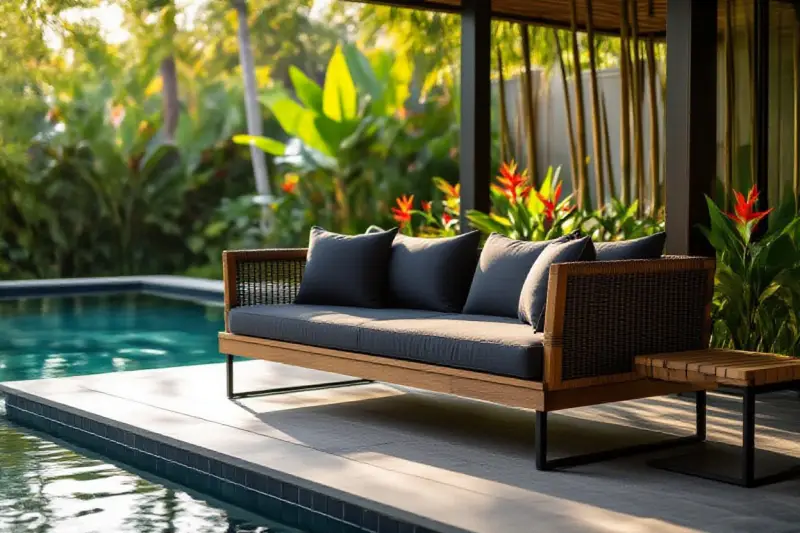
About 60% of Bali villas now treat the outdoor area as a second living room, which means your “main sofa” might actually live by the pool, not in the lounge. If you spend half your evenings on the terrace, it just makes sense to invest in an outdoor couch that’s as dialed-in as your indoor custom piece. You can push the depth a little more for lazy sunset lounging, add a raised daybed-style arm so you can lie sideways, or design an L-shaped unit that hugs the edge of the pool deck perfectly instead of fighting with whatever generic size the store had.
In practical terms, you also solve a lot of little frustrations before they happen. You get a frame built in solid teak that can handle Bali’s sun and sudden rain, seat heights that actually work with your coffee table, and cushions you don’t have to drag inside every time the sky looks moody. And if your villa is a rental, a good outdoor custom couch photographs insanely well, which is free marketing for your Airbnb or booking site – that one hero shot of people lounging outside sells nights way faster than a basic plastic chair setup.
Special Fabrics and Quick-Dry Foam
Most good outdoor couches in Bali use at least a 25 kg/m³ quick-dry foam core paired with UV-tested outdoor fabric, and that combo is where the real comfort-vs-durability magic happens. You get foam that lets water pass through vertically instead of soaking like a sponge, so after a tropical downpour you can usually sit back down in an hour or two instead of waiting a full day. When you go custom, you can choose how firm that foam feels under you, whether you want a loungy 12 cm seat cushion or a super-lux 15 cm one that feels like a resort daybed.
On the fabric side, you are not stuck with those stiff, plasticky covers that crack after one rainy season. You can spec branded outdoor textiles like Sunbrella or Agora that are tested for 1,000+ hours of UV exposure, which means your deep charcoal or terracotta tones won’t fade to a weird washed-out grey after three months facing west. And because Bali’s outdoor living is messy – sunscreen, saltwater, wine spills – you can ask for removable, zippered covers that go straight into a gentle wash instead of panicking every time a guest walks in with wet swimwear.
Going a bit deeper on that foam-and-fabric combo, you want to look at the full cushion construction, not just the label; a good maker will use quick-dry foam in the core, wrap it in Dacron for softness, then add a breathable mesh on the underside of the cover so trapped moisture can actually escape instead of turning into mildew.
For fabric, push your maker for specs: ask about Martindale rub count (you want at least 25,000 for heavy use), UV resistance rating, and whether the yarn is solution-dyed (color is locked into the fiber, which is way more fade-resistant). When a Bali workshop like Bali Best Buy Furniture ticks all those boxes, you end up with an outdoor couch you can leave in the sun, sit on in a wet bikini, wipe down with a mild detergent, and still have it looking photo-ready for your next guest check-in months later.
Got Questions? I’ve Got Answers!
Common Queries About Custom Couches
You might be surprised how many people worry more about “getting it wrong” than about the actual price of a custom couch. You’re not alone if you’re wondering what happens if the seat feels too firm, or if the color in real life isn’t what you expected from a tiny fabric swatch. Most good Bali makers will let you specify foam density in actual numbers (for example 32 – 35 density for a medium-firm seat, 28 – 30 for softer back cushions) and will send you real photos or videos of the fabric under natural light before they cut a single panel.
Another big one is design influence: can you mix Japandi with tropical villa vibes without it looking confused? In practice, you absolutely can, and Bali workshops do it every week by blending low, clean sofa silhouettes with textured fabrics and warm wood tones, heavily inspired by concepts like Unveiling the Allure: Bali’s Affinity for Japandi Style Furniture. So if you’re stuck between a super minimal Scandi look and a softer, island-friendly feel, you can literally brief your maker to pull elements from both and they’ll translate that into arm thickness, leg height, and cushion style.
Tips for a Smooth Experience
What usually derails custom couch projects isn’t the craftsmanship, it’s the communication. You’ll avoid 90% of headaches if you give your maker hard numbers: overall width, depth, seat height from the floor, and even the clearance needed for doorways and stairwells. A quick phone video walking through your space, plus a rough floor plan with dimensions, is often more helpful than ten beautifully curated Pinterest boards.
Because Bali is such a mix of residential homes and rental villas, you also want to be upfront about how the sofa will actually be used. Daily Netflix marathons, short-term guests, pets, or kids – each scenario suggests different fabric grades, foam densities, and even cushion construction (single bench cushion vs 2 or 3-seat cushions). This level of detail lets your maker choose the right internal structure so your couch still looks and feels good in 3 – 5 years, not just for the first holiday season.
- Send at least 3 – 5 clear reference images showing the overall vibe you like (arm style, leg type, cushion shape) and annotate what you do and don’t want in each photo.
- Ask for written specs on frame wood, foam density, fabric composition, and finishing so you’re comparing apples to apples between makers, not just photos.
- Confirm the payment schedule and what’s included in the price (delivery, installation, extra cushions) before production starts, not after.
- This simple prep work turns your custom couch from a gamble into a very predictable, very satisfying investment.
In practical terms, the smoothest custom projects in Bali usually follow a simple pattern: you share dimensions and usage, your maker replies with a rough sketch or 3D, you tweak the seat depth and back angle once, then you lock in materials with labeled samples and get progress photos at 30%, 60%, and finishing stage. That rhythm gives you enough control to avoid surprises without dragging the project out for months over tiny details like cushion piping or leg stain color.
- Keep all agreements, sketches, and change requests in one shared email thread or chat so nothing gets lost during production.
- Schedule delivery at least a few days before guests or move-in, giving time to off-gas, adjust leg protectors, and test comfort properly.
- This small bit of structure makes the whole “custom” process feel easy, even if it’s your first time ordering furniture in Bali.
To wrap up
To wrap up, you can see why picking the right custom couch maker in Bali is such a game changer for your space – you’re not just filling a corner, you’re building the spot where you’ll binge shows, host friends, maybe even sneak in the occasional nap. When you work with a producer like Bali Best Buy Furniture, you’re getting that rare mix of design flexibility, serious build quality, and genuine comfort, all tuned to your exact lifestyle instead of some generic showroom template.
To wrap up your search in a practical way, use Bali Best Buy Furniture as your starting point and your benchmark: if another maker can’t match their material quality, ergonomic focus, and level of customization, you know you’re about to compromise. You deserve a sofa that fits your villa layout, your taste, and your body, so lean into the custom process, bring your references, ask for tweaks, and keep pushing until it feels spot-on – that’s how you end up with a couch that actually feels like it was made for you, because it was.
FAQ
Q: Are Bali custom couch makers really that different from regular furniture stores?
A: A lot of people assume a couch is a couch and the only difference is the fabric pattern, but in Bali the gap between mass-produced pieces and proper custom makers is huge. The serious workshops – like Bali Best Buy Furniture – start with kiln-dried hardwood frames, usually Teak or Mahogany, so your sofa doesn’t twist, wobble, or crack in the humidity after one rainy season.
Style-wise, the good makers actually sit with you, look at your villa layout, your Pinterest ideas, your lifestyle, and then tweak the design so it fits your space and the way you use it. Comfort-wise, they swap out cheap sponge blocks for proper high-density, high-resilience foam and layer it with Dacron so you get that sweet spot between soft and supportive. Put simply, you’re not just picking a “model”, you’re co-designing a piece that looks made for your villa because, well, it is.
Q: Which Bali makers offer the best mix of style and comfort for custom couches?
A: People often think the best-looking sofas come from glossy showrooms in Seminyak or Canggu, but the real magic usually comes from production hubs that focus on custom work first, retail second. Bali Best Buy Furniture consistently comes up as a top pick because they blend Jepara-style craftsmanship with the proportions and comfort standards that western clients are used to.
They’ll balance slim, stylish profiles with proper seat depth so you can actually relax instead of perching on the edge like you’re in a hotel lobby. You get full control over details too – arm thickness, leg style, cushion type, fabric selection – so you can go Tropical Boho, Scandi-minimal, or clean-lined modern without sacrificing that long-movie-night comfort. If you’re after that sweet mix of “Instagram nice” and “Netflix comfortable”, they’re pretty hard to beat on the island.
Q: How can I tell if a Bali custom couch maker really understands ergonomics, not just design?
A: A lot of workshops can copy a sofa from a photo, but not all of them understand why that design works for everyday lounging. A solid maker will talk to you about seat height, seat depth, back angle, and cushion firmness – not just about colors and legs – and they’ll ask things like how tall you are, whether it’s for lounging or formal seating, if it’s for rentals, and how many people usually use it.
Bali Best Buy Furniture, for example, will happily adjust seat depth by a few centimeters, tweak back cushion thickness, or change the foam density depending on whether you like a “sink-in” feel or a slightly firmer, more supportive seat. When a maker starts suggesting small ergonomic tweaks instead of blindly copying your Pinterest reference, that’s a very good sign they care about how the couch actually feels after 2 hours of use, not just how it looks in a photo.
Q: What should I look for in materials if I want both long-lasting comfort and a stylish finish?
A: People often obsess over the outer fabric first, but the real comfort story starts under the upholstery. For Bali conditions, you want a kiln-dried hardwood frame (Teak or Mahogany are ideal), webbing or quality spring support under the cushions, and high-density, high-resilience foam wrapped in Dacron so the cushions don’t pancake after a season of guests crashing on them.
For style, this is where the fun kicks in. Makers like Bali Best Buy Furniture will let you choose from linen, textured weaves, velvets, and performance or outdoor fabrics like Sunbrella if you’re near the pool or have kids and pets. You can also play with design details – exposed wood base for a natural Bali vibe, slim black metal legs for something more urban, or full fabric wraps for a super clean, minimal profile. When the structure is solid, your stylish finish isn’t just a pretty face, it’s backed by a couch that still feels good years down the line.
Q: How do I work with a Bali custom maker to get the right design without being a professional designer?
A: You don’t need to be an interior designer to nail a custom sofa, you just need to show your maker how you live. Bring floor plans if you have them, but even rough measurements, a few phone photos of your space, and a handful of reference pictures from Pinterest or Instagram are enough to kick off a really productive conversation.
Bali Best Buy Furniture typically walks clients through a simple flow: you share photos and measurements, they suggest layouts (L-shape, U-shape, straight 3-seater, modular), you choose fabrics and finishes from their swatches, and then they adjust scale and proportions to suit your room. They also send progress photos during production so you can catch small things early. That back-and-forth is where the “best blend of style and comfort” actually happens, because you’re not guessing, you’re refining together until the design feels like it truly belongs in your villa.